Info
Known as the Bulrush Veneer, this elegant moth is a master of disguise within the wetlands. Belonging to the "grass moth" family, it is a specialist that spends its entire life cycle tied to the water's edge. While its elongated face might look like a tiny stinger or a strange "nose," it is actually a harmless pollinator that adds a touch of pearly-white beauty to marshy landscapes.
🔍 How to Identify
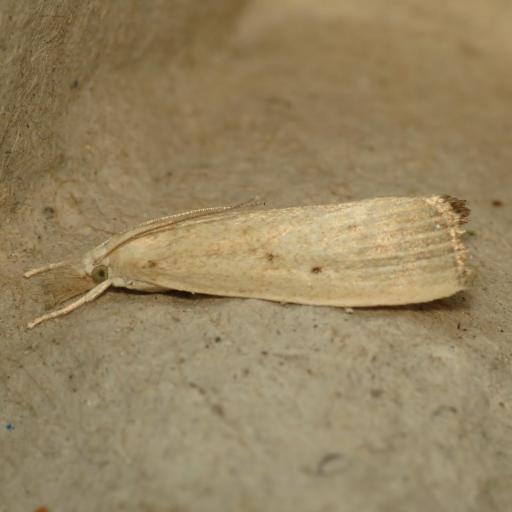
- 👃 The "Snout": It features long, forward-pointing mouthparts called labial palps, which give the head a distinct, pointed appearance common to many veneer moths.
- 🦋 Pearly Wings: The forewings are a creamy, pale straw or off-white color, often decorated with tiny dark dots and a subtle silken sheen that catches the moonlight.
- 🪵 Cylindrical Rest: When sitting on a leaf, it rolls its wings tightly around its body, making it look like a tiny, broken twig or a sliver of dried grass to avoid predators.
🌾 Habitat & Ecology
- 💧 Wetland Specialist: You will almost exclusively find this moth near marshes, fens, and ponds where Typha (Bulrushes/Cattails) grow. It rarely wanders far from these damp havens.
- 🐛 Internal Eaters: The larvae (caterpillars) are "stem borers." They live a hidden life inside the stems and leaves of Bulrushes, feeding on the soft inner tissues where they are protected from birds and the elements.
⚠️ Safety & Toxicity
- ✅ Harmless Friend: The Bulrush Veneer is completely non-toxic and lacks any mechanism to bite or sting. It is a "neutral" insect that poses no threat to humans, pets, or garden vegetables.
- 🛡️ Ecological Value: Because it is so specialized, it serves as a great indicator of a healthy wetland ecosystem. If you see them, it means your local water source is supporting a diverse range of life.
✨ Fun Fact
The Bulrush Veneer is a winter survivor! Instead of migrating, the larvae spend the coldest months tucked safely inside the hollow stems of cattails, waiting for the spring thaw to finish their transformation into moths.
More Details








