Info
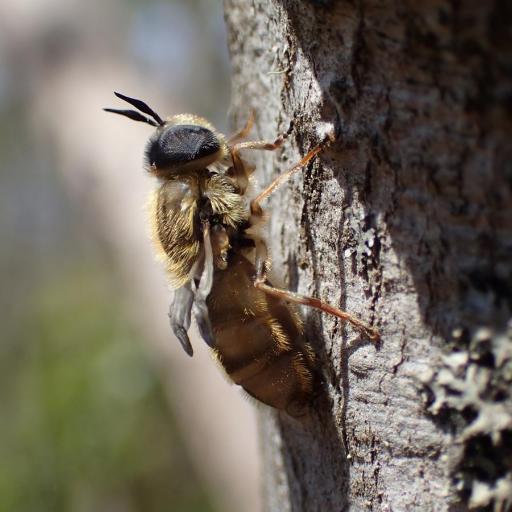
Meet the Callicera, the "Phantom of the Ancient Woods." These insects are master illusionists, dressing up in fuzzy golden coats to mimic bees and avoid predators, despite being completely harmless. Because they rely on very specific forest conditions, spotting one is often considered a lucky omen for hikers and naturalists.
🔍 How to Identify
- 📡 The "Long" Horns: Unlike most common flies that have tiny antennae, Callicera species possess remarkably long, prominent antennae, often tipped with a tiny white segment (the arista).
- ✨ Metallic Velvet: Their bodies are covered in dense, upright hairs that range from golden-bronze to deep orange, giving them a shimmering, plush appearance.
- 🚁 Precision Hovering: They are elite aviators. You will often see them hanging perfectly still in a shaft of sunlight before darting away at high speeds, a behavior typical of the Syrphidae family.
🌲 Habitat & Ecology
- 🌳 Ancient Tree Lovers: These flies are "bio-indicators" of healthy, old-growth forests. They are specifically tied to aging trees that have "rot holes"—water-filled cavities where their larvae live and grow.
- 🌼 Sunlit Diners: As adults, they are peaceful pollinators. They spend their days visiting flowers in sunny glades, refueling on nectar and pollen to power their high-energy flight.
⚠️ Safety & Toxicity
- 🛡️ All Bark, No Bite: Despite their bee-like appearance, Callicera insects are entirely harmless. They do not possess a stinger, and they do not bite.
- 🌿 Gentle Guests: They are safe around children and pets. Their only defense is their "mimicry," hoping that by looking like a bee, predators will leave them alone.
✨ Fun Fact
- 🤿 The Snorkel Life: The larvae of these flies are nicknamed "rat-tailed maggots." While living in the stagnant water of tree rot-holes, they breathe through a long, telescopic tube that they extend to the water's surface like a biological snorkel!
More Details








