Info
Known affectionately as the Mallow Scrub-Hairstreak, this tiny butterfly is a master of high-stakes deception. Native to the warmer regions of the Americas and the Caribbean, it is a frequent visitor to sun-drenched backyard gardens and coastal scrublands. While it may look delicate, it is a survival expert that uses clever "decoy" markings to outsmart hungry birds and lizards.
🔍 How to Identify
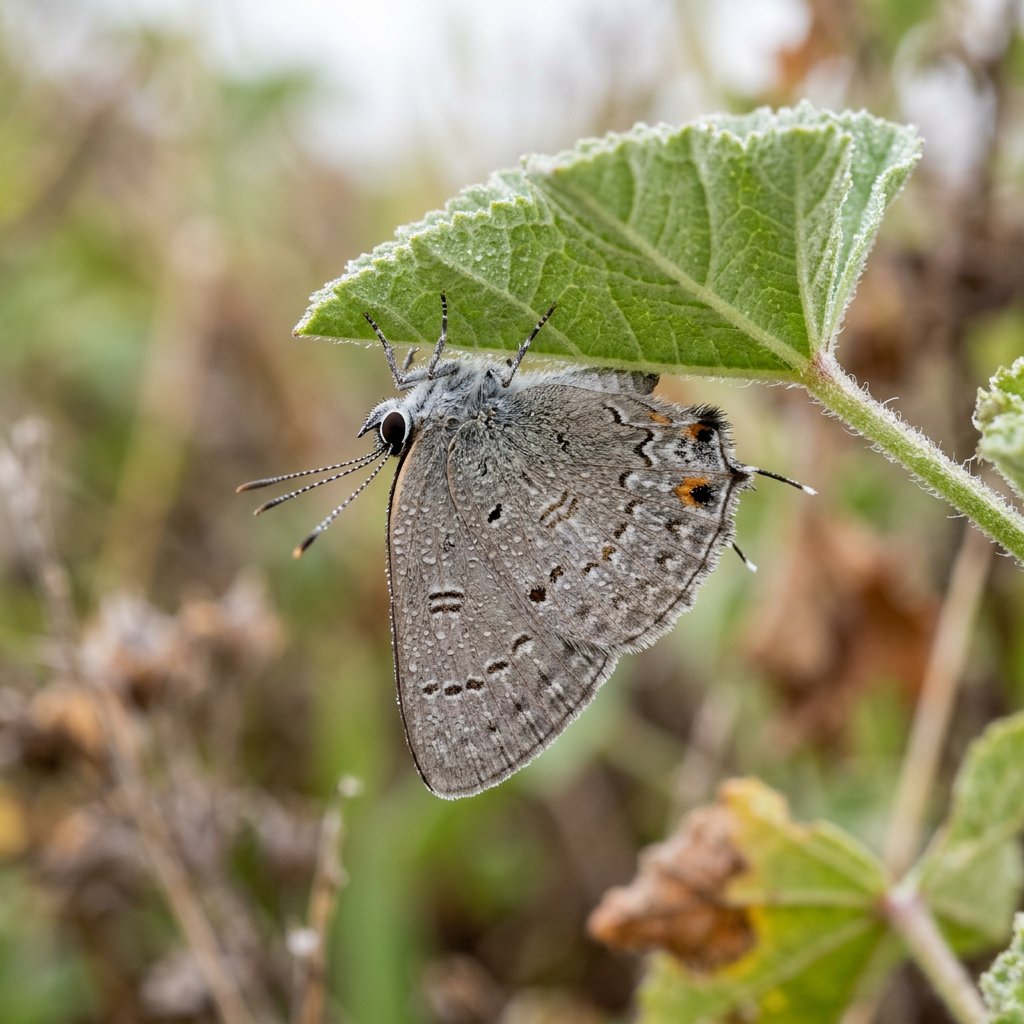
- 🦋 The Wings: When resting with wings closed, you'll see a soft, chalky gray or brownish-gray underside decorated with a row of small, dark, white-edged spots.
- 🧶 The Tails: Look closely at the bottom of the hindwings for two tiny, hair-like "tails" that mimic the appearance of antennae.
- 👁️ The Eyespots: Near those tails, the butterfly sports a bright orange and black spot. This creates a "false head," tricking predators into attacking the less-vital wing edges rather than the real head.
🌲 Habitat & Ecology
- 🌸 The Mallow Connection: As its name suggests, this insect is biologically tied to the Mallow family (Malvaceae). While adults drink nectar from many flowers, the caterpillars feed almost exclusively on plants like Hibiscus, Sida, and common mallows.
- ☀️ Sun Seekers: You won’t find this butterfly in deep, dark forests. It thrives in open, disturbed areas, sunny meadows, and suburban gardens where it can bask on leaves to regulate its body temperature.
⚠️ Safety & Toxicity
- 🛡️ Harmless Friend: The Mallow Scrub-Hairstreak is a "friend" to the gardener. It possesses no sting, no bite, and is not known to be toxic to humans or pets.
- 🍃 Low Impact: While the caterpillars are leaf-eaters, they are rarely found in large enough numbers to cause significant damage to your ornamental plants. They are a natural and healthy part of a garden's ecosystem.
✨ Fun Fact
- 🎭 The "Hindwing Dance": When this butterfly lands, it often wiggles its hindwings up and down in opposite directions. This motion makes the tiny tails move like twitching antennae, making the "false head" look even more alive to a confused predator!
More Details








