Info
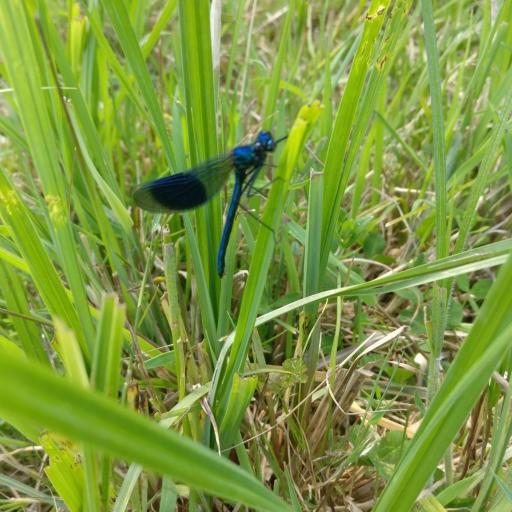
Often called the "Jewel of the River," the Banded Demoiselle is a shimmering masterpiece of the insect world. Unlike the rigid, darting flight of most dragonflies, this damselfly flutters with a hypnotic, butterfly-like grace along sun-drenched riverbanks. Seeing one is a glowing endorsement of your local environment, as they are notoriously picky about the cleanliness of the water they call home.
🔍 How to Identify
- 🦋 The "Banded" Wings: The male is unmistakable thanks to a broad, dark-blue or black "thumbprint" band across the center of each wing. Females, by contrast, have translucent wings with a delicate pale-green tint.
- 💎 Metallic Body: Their slender bodies possess a stunning iridescent sheen. Males are typically a deep, electric blue, while females glow with a metallic bronze or emerald-green tint.
- 🪁 Fluttery Flight: They move with a distinctive, rhythmic wing beat. This "lazy" appearance is actually highly maneuverable, allowing them to weave through dense riverside reeds with ease.
🌲 Habitat & Ecology
- 💧 Clean Water Indicator: These insects are ecological snobs. They require slow-flowing, well-oxygenated streams or rivers with plenty of floating vegetation. If you see them, it’s a sign that the water quality in the area is excellent.
- 🦟 The Aerial Assassin: Don't let the beauty fool you; they are fierce predators. They spend their days "perch-hunting," sitting on a leaf until a gnat, mosquito, or small fly passes by, then launching a high-speed ambush to snatch their prey mid-air.
⚠️ Safety & Toxicity
- 🛡️ Gentle Giants: Despite their "scary" dragonfly-like appearance, Banded Demoiselles are completely harmless. They have no stinger and their mouthparts are far too small to bite a human.
- 🐾 Eco-Friendly Neighbors: They are non-toxic to pets and children. In fact, they are beneficial "garden bodyguards" that help naturally reduce the population of biting midges and mosquitoes around your property.
✨ Fun Fact
To win over a female, the male performs an elaborate "water dance." He will hover over a patch of flowing water and purposefully submerge his tail or wings to show the female that he has found a high-quality territory with the perfect oxygen levels for her future eggs.
More Details








