Info
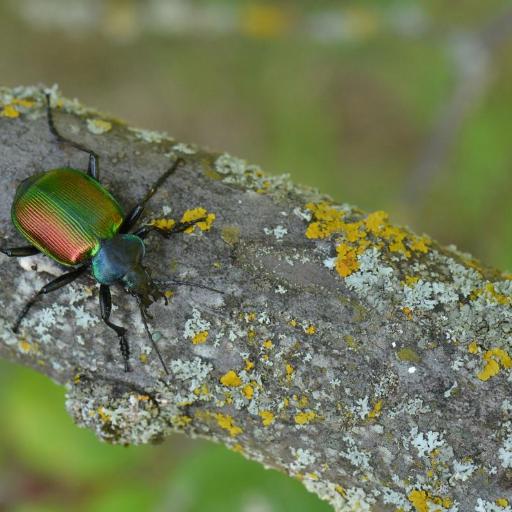
Clad in a suit of iridescent armor that shifts between emerald green and burnished gold, the Forest Caterpillar Hunter is a literal knight in shining armor for our forests. This large, active ground beetle is a celebrated "biological control agent," famously imported from Europe to North America in the early 1900s to wage war against invasive moth populations. It is a tireless guardian of the canopy, patrolling tree trunks for its favorite prey.
🔍 How to Identify
- 🪲 Iridescent Elytra: The wing covers are a brilliant, metallic green-gold, often showing a fiery red or violet shimmer when hit by direct sunlight.
- 📏 Robust Frame: It is a large insect, reaching up to 30mm (over an inch) in length, with a notably broad body compared to other ground beetles.
- 🏃 Athletic Build: It possesses long, powerful legs designed for sprinting across the forest floor and scaling vertical bark with ease.
🌲 Habitat & Ecology
- 🌳 Arboreal Ambush: While most ground beetles (Carabidae) stay strictly on the soil, Calosoma sycophanta is an expert climber. It spends much of its life high in the branches of oak and deciduous trees.
- 🐛 Specialized Predator: Both the adults and their grubs are "caterpillar specialists." They are particularly famous for hunting the Spongy Moth (formerly Gypsy Moth), making them a best friend to foresters and gardeners alike.
⚠️ Safety & Toxicity
- 🛡️ Beneficial Ally: This beetle is not a pest and is entirely harmless to humans. It does not possess a stinger and does not carry diseases.
- 👃 Chemical Defense: If handled roughly, it may emit a pungent, sour-smelling secretion from its abdomen to discourage being eaten. While it has strong mandibles and may deliver a tiny "nip" if provoked, it is not venomous or dangerous to pets or children.
✨ Fun Fact
- ⏳ A Long-Term Guard: Unlike many insects that live for only a single summer, the Forest Caterpillar Hunter can live for up to four years, burrowing deep into the soil to hibernate through the winter before emerging to hunt again in the spring.
More Details








