Info
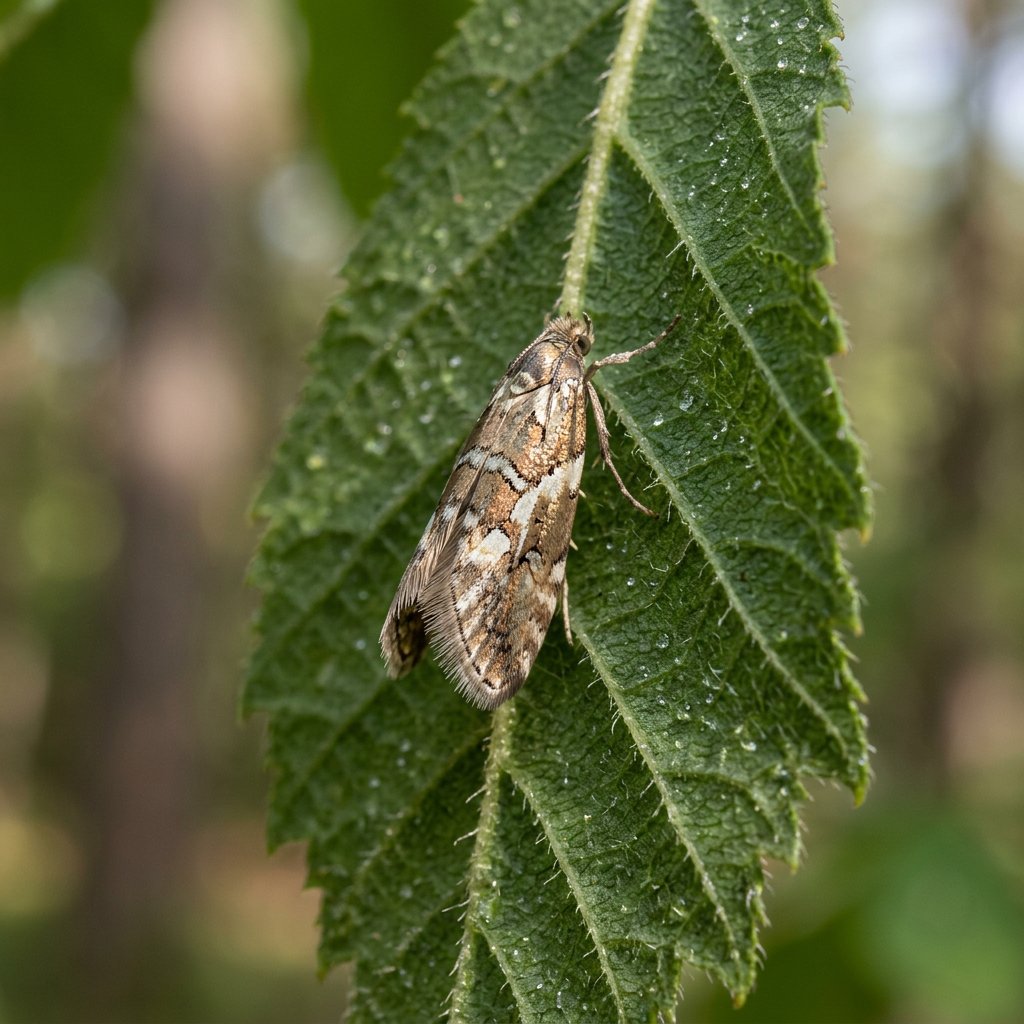
Meet the Horse-chestnut Leaf Miner, a tiny moth that has become the "archenemy" of one of Europe’s most beloved park trees. While the adult moth is a miniature masterpiece of gold and silver, its offspring are responsible for the premature "autumn" we often see in mid-summer. Since its discovery near Lake Ohrid in the 1980s, this invasive traveler has rapidly conquered the continent, turning lush green canopies into crispy brown landscapes.
🔍 How to Identify
- 🦋 The Adult Moth: An incredibly small insect (3-5mm) with bright, ochre-colored forewings featuring striking silvery-white stripes edged with black.
- 🍂 The "Mines": The most obvious sign isn't the moth itself, but the long, brown, caterpillar-carved blotches (mines) that appear between the leaf veins.
- 🐛 The Larvae: If you hold a damaged leaf up to the light, you can see the flattened, pale green caterpillars wiggling inside the "sandwich" of the leaf layers.
🌲 Habitat & Ecology
- ⚔️ A Specialist Foe: This insect is a specialist that feeds almost exclusively on the Common Horse-chestnut tree. It is considered a major pest because it interrupts the tree's ability to photosynthesize.
- 🔄 Rapid Reproduction: In a single warm summer, this moth can go through three to five generations. This "population explosion" is why a tree can look perfectly healthy in May and completely dead-brown by early August.
- 🍂 The Winter Sleep: They survive the winter as pupae inside the fallen leaves on the ground, waiting for the spring warmth to emerge and start the cycle again.
⚠️ Safety & Toxicity
- ✅ Harmless to Humans: This moth is entirely safe for people and pets. It does not bite, sting, or cause any skin irritation.
- 🌳 Threat to Nature: While it doesn't kill trees directly, it severely weakens them. This makes the trees more vulnerable to more dangerous threats, like "Bleeding Canker" or drought stress.
- 🧹 Control Tip: To help your local trees, raking up and burning (or deeply composting) fallen Horse-chestnut leaves in autumn is the best way to reduce the population for the next year.
✨ Fun Fact
🕵️ The Great Mystery: Even though it was discovered in the 1980s, scientists are still debating its true origin. Some believe it lived in tiny, isolated pockets of the Balkan mountains for thousands of years until modern road travel helped it "hitchhike" across the globe!
More Details








