Info
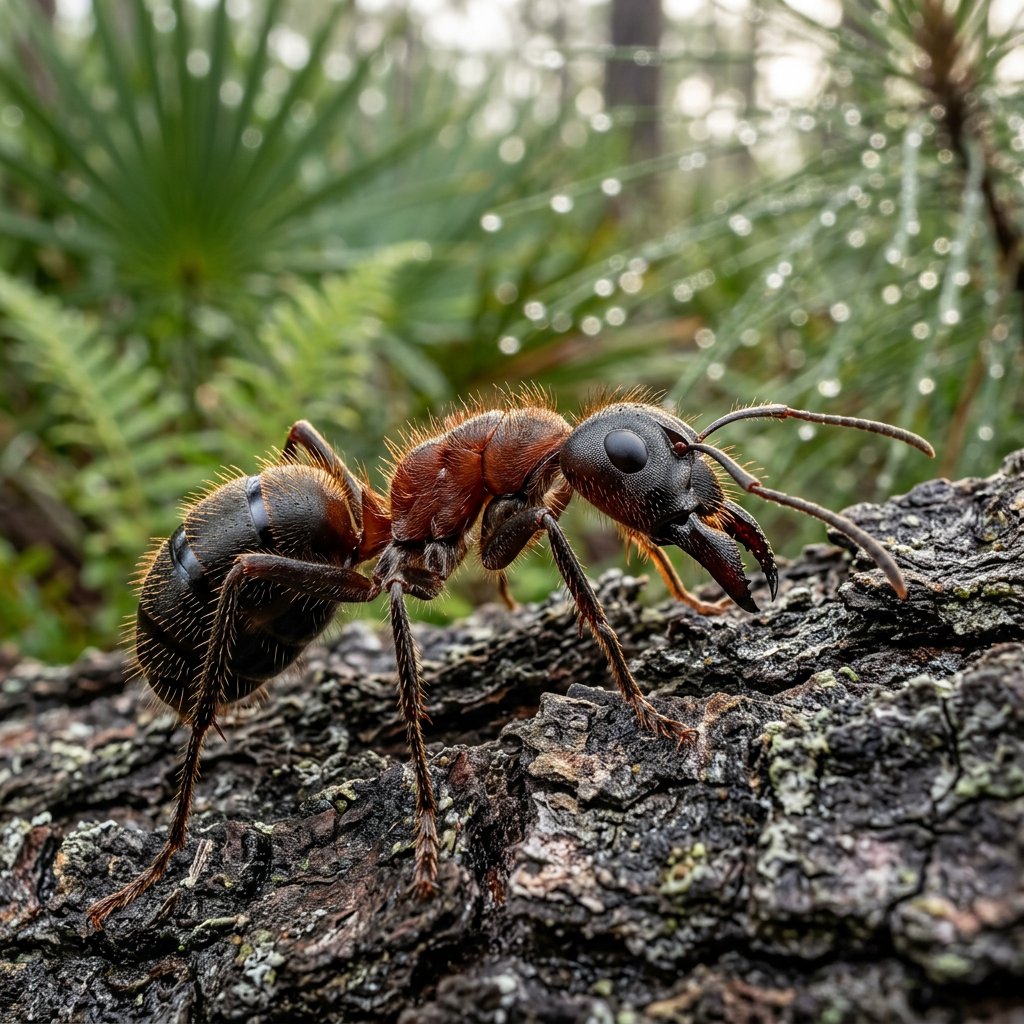
Known as the Florida Carpenter Ant, this vibrant insect is the sunset-colored architect of the southeastern United States. Often spotted scurrying across porches or scouting through leaf litter, these ants are famous for their large size and striking orange-and-black contrast. While they are often feared as "wood eaters," they are actually meticulous cleaners who prefer to nest in pre-existing cavities rather than destroying healthy structures.
🔍 How to Identify
- 🟠 Two-Toned Body: They feature a distinctive bright orange or reddish-brown head and thorax, which contrasts sharply with a dark black, bulbous abdomen (gaster).
- 📏 Size Variety: These ants are "polymorphic," meaning you will see tiny workers alongside massive "majors" with oversized heads designed for defense and crushing food.
- ✨ Golden Shimmer: If you look closely under a magnifying glass, their dark abdomen is covered in fine, golden-yellow hairs that give them a slightly fuzzy appearance.
🌲 Habitat & Ecology
- 🪵 The Master Remodelers: Unlike termites, they do not eat wood for nutrition. Instead, they excavate "galleries" in damp or decaying wood, like old stumps or fallen logs, to create polished, debris-free nurseries for their young.
- 🍯 The Sweet Tooth: They are major fans of "honeydew," a sugary substance secreted by aphids. You’ll often find them "farming" small garden pests to collect this nectar, though they also act as brave predators of other small insects.
⚠️ Safety & Toxicity
- 🐜 Biting, Not Stinging: Florida Carpenter Ants do not have a stinger. However, the larger "major" workers have powerful mandibles and can deliver a sharp, painful pinch if they feel the colony is threatened.
- 🧪 Chemical Defense: When they bite, they may spray a small amount of formic acid into the wound. This isn't dangerous to humans or most pets, but it can cause a temporary stinging or itchy sensation on the skin.
✨ Fun Fact
These ants are surprisingly "vocal" communicators! When the colony is startled, workers will strike their abdomens against the floor of their wooden nest, creating a distinct rhythmic drumming sound that can actually be heard by the human ear.
More Details








