Info
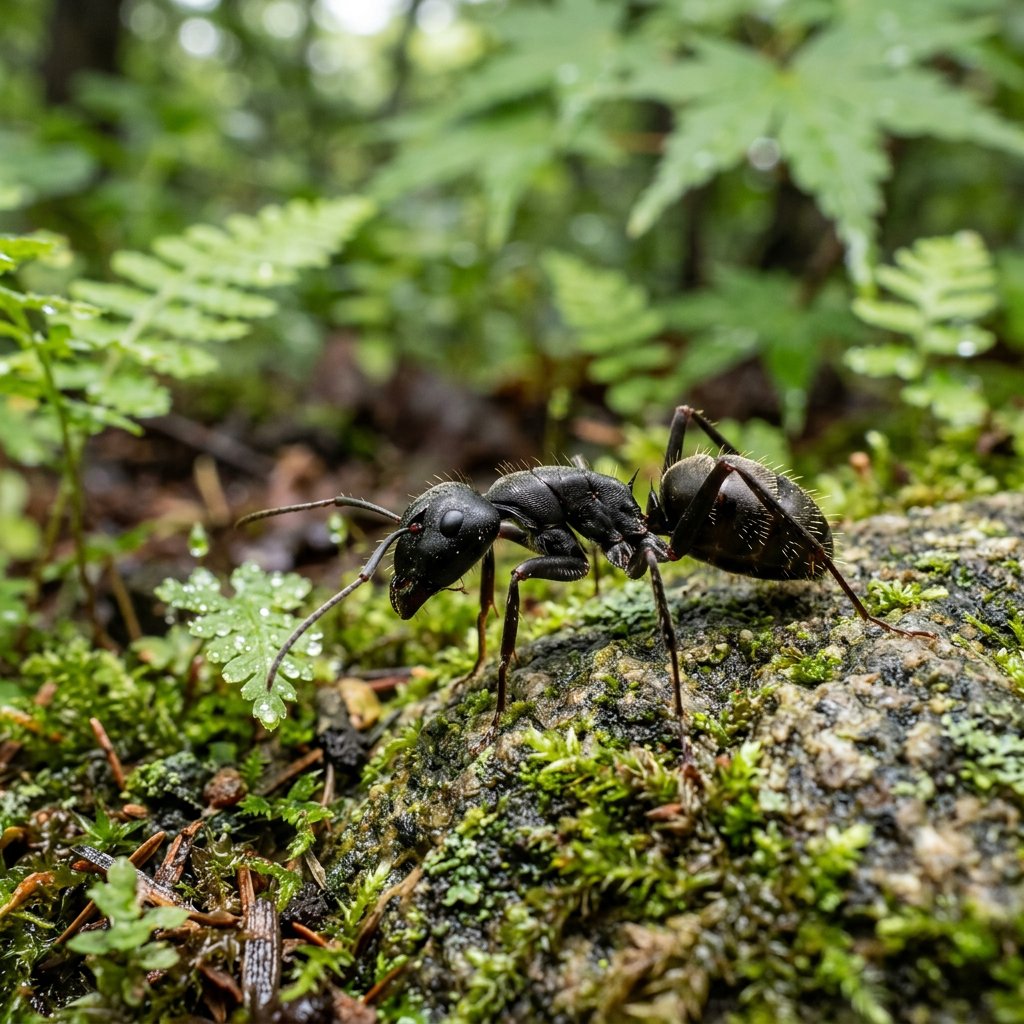
Known as the "Kuro-O-Ari" (Black Great Ant) in its native Japan, the Japanese Carpenter Ant is one of the true heavyweights of the insect world in East Asia. These "black giants" are famous for their impressive size, complex social structures, and their role as the dominant guardians of the forest floor. While they share the "carpenter" name, they are more often architects of the earth than destroyers of homes.
🔍 How to Identify
- 🐜 Imposing Size: These are among the largest ants you’ll encounter; workers can vary greatly in size (polymorphism), with some "major" workers reaching nearly 15mm in length.
- 🌑 Velvety Texture: Unlike many shiny ant species, Camponotus japonicus has a distinct, deep matte-black body that looks almost like charcoal or dark velvet.
- 📐 Powerful Jawline: Look for the "majors" with oversized, heart-shaped heads and thick, powerful mandibles used for defense and crushing tough seeds or insects.
🌲 Habitat & Ecology
- 🍂 Soil Dwellers: Unlike many Western carpenter ants that prefer dry wood, this species is primarily a ground-nester. They build extensive galleries under large stones, rotting logs, or at the roots of established trees.
- 🍯 The Honeydew Ranchers: They are master "farmers." You will often see them climbing trees to tend to colonies of aphids, protecting the tiny insects from predators in exchange for sweet, energy-rich honeydew.
- ⚔️ Territorial Sentinels: They are highly organized and will defend their foraging trails aggressively. They use chemical pheromones to call for backup if they find a large food source or a significant threat.
⚠️ Safety & Toxicity
- 🛡️ Mechanical Pinch: They do not possess a stinger. However, their large size means they can deliver a sharp, noticeable pinch with their mandibles if they feel the nest is under attack.
- 🧪 Formic Acid: If they bite, they may simultaneously spray formic acid from the tip of their abdomen into the wound. While not dangerous to humans, it can cause a temporary stinging or burning sensation.
- 🐕 Pet Neutral: They are not toxic to pets, though a curious dog or cat might get a "nibble" on the nose if they sniff too close to a nest entrance.
✨ Fun Fact
These ants have a fascinating relationship with certain species of Lycaenid butterflies. The ants actually "babysit" the butterfly caterpillars, protecting them from wasps and spiders, while the caterpillars reward the ants by secreting a specialized "sugar-syrup" from a gland on their backs!
More Details








