Info
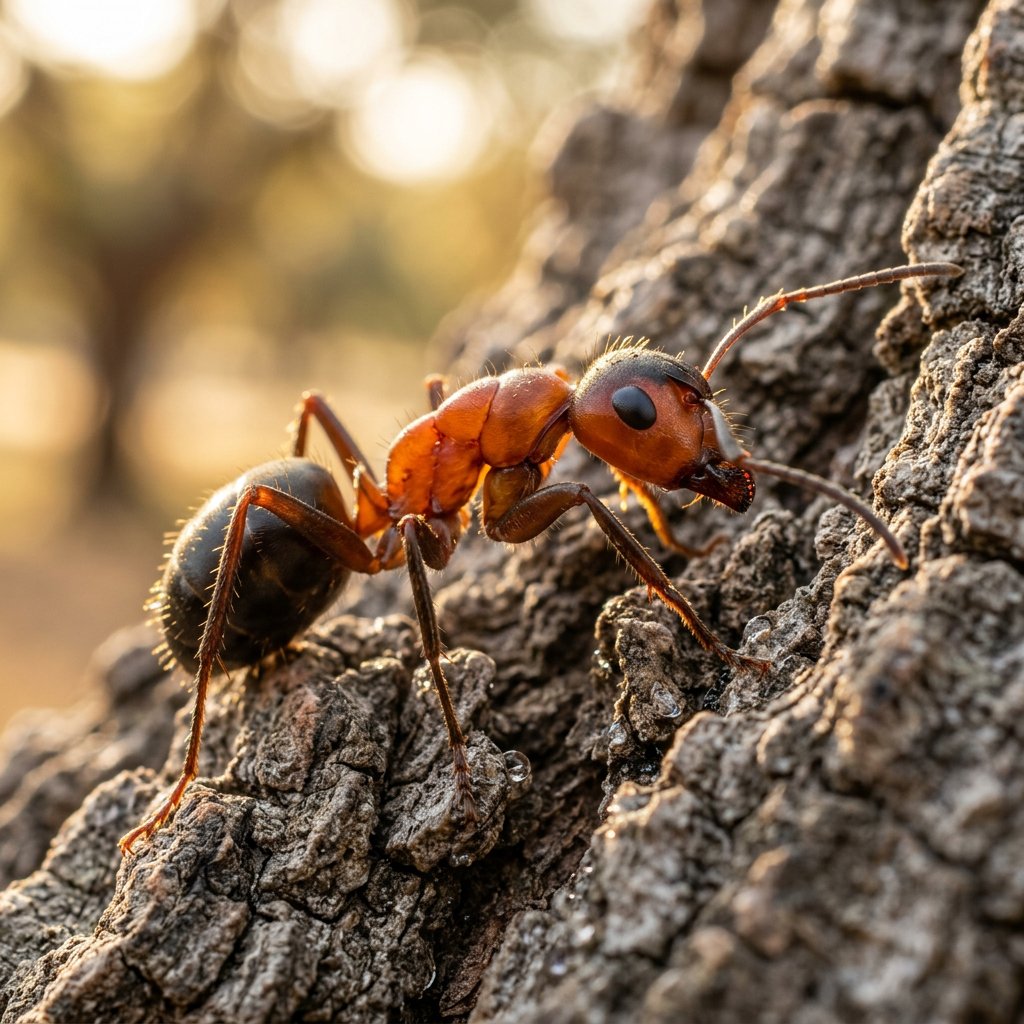
Meet the Red-headed Carpenter Ant, a Mediterranean native known for its clever camouflage. Often called the "Acrobat Ant Mimic," this little worker has evolved to look exactly like its more aggressive neighbors to stay safe from predators. While it belongs to the powerful Camponotus genus, it is much more laid-back and timid than its giant "wood-boring" cousins.
🔍 How to Identify
- 🔴 The Bi-color Body: A striking visual contrast featuring a bright rusty-red thorax paired with a glossy, jet-black head and abdomen.
- 🐜 Sleek Shape: A smooth, continuous curve along the top of the thorax, which is a hallmark of the Carpenter ant family.
- 📏 Size Variation: As a polymorphic species, you’ll see workers of various sizes in the same line, ranging from tiny minors (4mm) to larger, bulkier majors (8-10mm).
🌲 Habitat & Ecology
- 🎭 The Great Pretender: These ants are master mimics. They often forage alongside Crematogaster scutellaris (Acrobat ants). Because Acrobat ants have a painful sting and taste bad to predators, Camponotus lateralis copies their colors to enjoy "protection by association."
- 🏚️ Woodland Dwellers: Unlike the carpenter ants that destroy homes, these ants prefer "pre-fabricated" housing. They nest in dead tree stumps, under thick bark, or even inside hollow plant galls and stems.
- 🍯 Honeydew Harvesters: They are docile scavengers that spend most of their time tending to aphids on fruit trees or shrubs, collecting the sweet "honeydew" the aphids secrete.
⚠️ Safety & Toxicity
- 🛡️ Harmless Neighbor: This species is incredibly shy. If you disturb their nest, their first instinct is to freeze or hide rather than bite.
- 🚫 No Stinger: Like all members of the Formicinae subfamily, they do not have a stinger. While they have mandibles, they are generally too small and timid to break human skin or bother pets.
✨ Fun Fact
- ✨ The Shadow Follower: These ants are so committed to their "costume" that they have been observed following the scent trails of the ants they mimic. They literally "hitchhike" on the navigation paths of other species to find the best food sources!
More Details








