Info
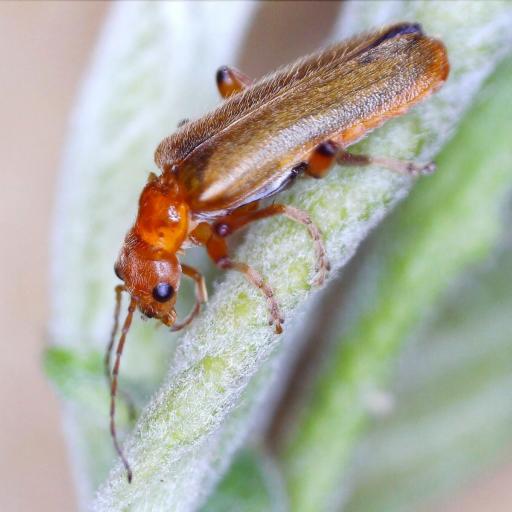
Often called the Cryptic Soldier Beetle, this slender, warm-toned insect is a true "friend" to gardeners. While its elongated body and long, sweeping antennae might make it look intimidating to some, it is actually a peaceful pollinator and a fierce defender of plants. Its name, cryptica, refers to how difficult it is to distinguish from its close beetle cousins—it is a master of hiding in plain sight by looking just like everyone else.
🔍 How to Identify
- 🪲 Leathery Wings: Unlike many beetles with "armored" shells, its wing covers (elytra) are soft, flexible, and usually a pale, honey-brown or orange-tan color.
- 🎨 The "Badge" Mark: It features a bright orange-red thorax (the section behind the head) that often sports a small, dark, shadowy spot in the center.
- 📏 Slender Silhouette: It has a notably long, straight body and long, blackish legs that allow it to scurry quickly across flower petals and leaves.
🌲 Habitat & Ecology
- 🌼 Flower Power: These beetles are most active during late spring and summer. You will typically find them perched on flat, open flowers like daisies, hogweed, or wild carrots, where they feed on nectar and pollen.
- ⚔️ Natural Pest Control: They are a gardener’s secret weapon. While the adults enjoy flowers, they are also predatory, hunting down and eating aphids, caterpillars, and other soft-bodied pests that might harm your plants.
- 🌱 Litter Dwellers: Their larvae live on the ground, hidden among leaf litter or soil, where they act as tiny "lions," hunting for snails, slugs, and soil-dwelling eggs.
⚠️ Safety & Toxicity
- 🛡️ Completely Harmless: The Cryptic Soldier Beetle does not sting and is not aggressive toward humans or pets. It lacks the mandibles to deliver a painful bite to people.
- 🧪 Reflex Bleeding: If handled roughly, they may release a tiny drop of bitter-tasting fluid from their joints to ward off predators like birds. While harmless, it's best to let them crawl onto a leaf rather than picking them up.
✨ Fun Fact
🎖️ They earned the nickname "Soldier Beetle" because their bright red and black coloration reminded early naturalists of the vibrant red coats worn by 18th-century British soldiers.
More Details








