Info
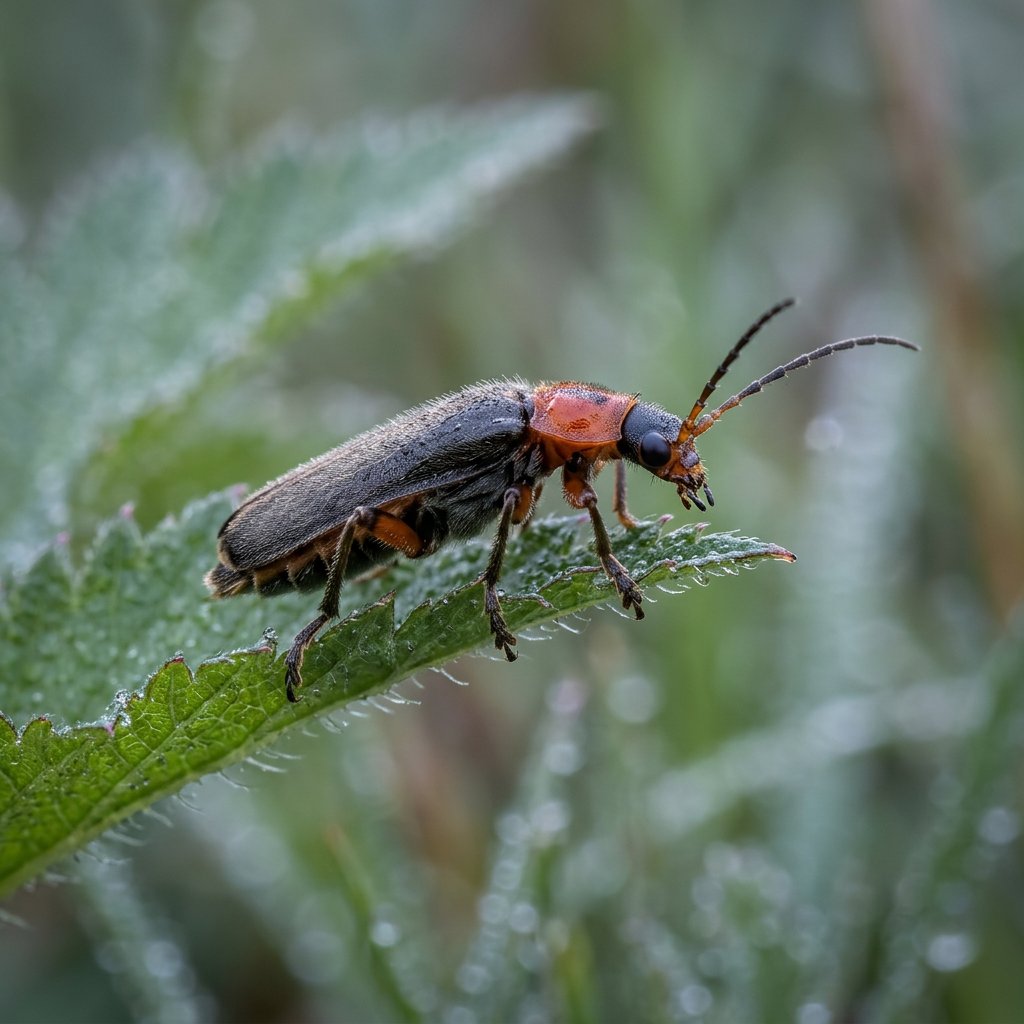
Often referred to as the Soldier Beetle, Cantharis livida is a dapper, medium-sized beetle that acts as a miniature guardian for your flower beds. While many beetles look like they are wearing heavy armor, these "Soft-winged Beetles" have a more delicate, leathery appearance. They are the quintessential "good guys" of the insect world, often found patrolling tall grasses and flat-topped flowers during the warmth of mid-summer.
🔍 How to Identify
- 🪽 Leathery Wings: Unlike the hard, shiny shells of ladybugs, their wing covers (elytra) are soft, flexible, and usually a pale brownish-orange or "livid" buff color.
- 🎨 Contrast Markings: They feature a bright orange-red thorax (the section behind the head) which often sports a distinct, dark central spot.
- 🦵 Dark "Knees": Their legs are primarily orange, but they typically have black tips on the "thighs" (femora) and dark lower legs, making them look like they are wearing tiny black boots.
🌲 Habitat & Ecology
- 🐝 Dual-Purpose Visitors: These beetles are highly beneficial because they perform two jobs at once. They visit flowers like Hogweed and Cow Parsley to feed on nectar and pollen (aiding pollination), but they are also fierce predators of aphids.
- 🍂 Leaf Litter Larvae: Their young live tucked away in the soil or under leaf litter. These velvety larvae are also predatory, hunting down small snails, slugs, and other soil-dwelling pests throughout the winter and spring.
⚠️ Safety & Toxicity
- ✅ Friendly Resident: Cantharis livida is completely harmless to humans. They do not sting, and they are not known to bite people unless handled very roughly.
- 🧪 Chemical Defense: Like many soldier beetles, they produce a bitter-tasting chemical to discourage birds from eating them. While this isn't dangerous to humans or pets, it’s best to let them go about their business undisturbed.
✨ Fun Fact
🎖️ Historical Fashion: They earned the name "Soldier Beetle" during the 18th century because their bright orange and red colors closely resembled the "Redcoat" uniforms worn by the British infantry of that era.
More Details








