Info
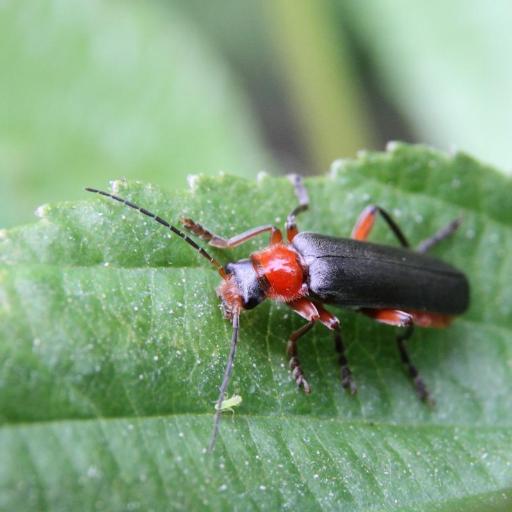
Often called the Pale Soldier Beetle, this slender summer visitor is a true "uniformed" ally for any gardener. While its bright colors might look like a warning, it’s actually a sign of a hard-working predator and pollinator that spends its days patrolling flower heads for a snack.
🔍 How to Identify
- 🎨 Soft Wing Covers: Unlike many beetles with hard, crunchy shells, its elytra (wing cases) are relatively soft and flexible, typically appearing in a smoky grey or charcoal black.
- 🧡 The "Soldier" Uniform: It sports a bright orange-to-red thorax (the section behind the head) and matching orange legs, though the "knees" or lower leg segments are often tipped with black.
- 📏 Slender Profile: They have a distinctively long, narrow body shape and long, sensitive antennae that they use to sniff out prey among the petals.
🌲 Habitat & Ecology
- 🐝 The Dual Agent: These beetles are remarkably beneficial; the adults act as pollinators while they crawl over flowers, but they are also fierce predators that hunt aphids and other small, soft-bodied pests.
- 🌼 Flower Power: You are most likely to spot them in early to mid-summer on flat, "landing pad" flowers like Cow Parsley, Hogweed, or Daisies, where they bask in the sun and wait for prey.
- 🐛 Soil Guardians: Their larvae live in the soil or leaf litter, where they act as "tiny wolves," hunting snails, slugs, and other ground-dwelling larvae before they can damage your plants.
⚠️ Safety & Toxicity
- ✅ Harmless Friend: This insect is completely harmless to humans. It does not have a stinger, and its mandibles are too small to bite human skin effectively.
- 🧪 Chemical Defense: Like many soldier beetles, they produce a mild defensive chemical that makes them taste bitter to birds. This "aposematic" coloring (the bright orange) is simply a way of telling predators, "I taste terrible, don't eat me!"
- 🐾 Pet Safety: They pose no threat to curious cats or dogs, though the bitter taste usually ensures a pet won't try to eat more than one.
✨ Fun Fact
In many regions, they are nicknamed "Hog-weed Bonkers" or "The Love Beetle" because they are almost always found in pairs. They spend a massive portion of their short adult lives mating on top of flowers to ensure the next generation of garden protectors is ready for the following year!
More Details








