Info
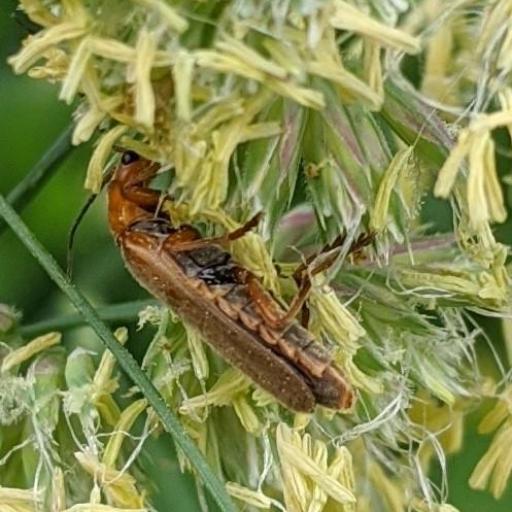
The Common Red Soldier Beetle, often affectionately known as the "Blood-sucker" (despite being completely harmless), is a familiar summer sight in meadows and gardens. These narrow, vibrant beetles are often seen in pairs on flat-topped flowers, playing a dual role as both pollinators and fierce garden protectors. While their bright red coloring serves as a "stay away" sign to birds, they are one of the most beneficial insects you can find among your plants.
🔍 How to Identify
- 🐞 The "Leatherwing" Texture: Unlike many beetles with hard, shell-like backs, their wing cases (elytra) are soft and flexible, giving them a slightly velvety appearance.
- 🎨 Uniform Color: They are almost entirely a warm orange-red or brick-red, including the head and thorax, which distinguishes them from other soldier beetle species that have black spots.
- 📡 Long Antennae: They possess long, dark, thread-like antennae that are constantly twitching as they navigate through foliage and flowers.
🌲 Habitat & Ecology
- 🌼 The Umbellifer Hangout: They have a strong preference for "umbellifers"—plants with flat, umbrella-like flower clusters like Cow Parsley, Hogweed, and Fennel—where they can easily land and hunt.
- ⚔️ Aphid Assassins: While they do eat nectar and pollen, they are primarily predatory. They spend their days patrolling flowers to ambush aphids, caterpillars, and other soft-bodied pests.
- 🍂 Leaf Litter Nursery: Their larvae live at the ground level, hidden in long grass or leaf litter. These "earth-dwelling" larvae are also predatory, feeding on garden slugs and snails during the winter months.
⚠️ Safety & Toxicity
- ✅ Status: Completely harmless to humans and pets.
- 🕊️ Gentle Nature: They do not sting and they do not bite humans. If handled, they might release a bitter-tasting chemical to deter predators, but this won't hurt you—it just makes them a very unappealing snack for a bird!
✨ Fun Fact
[Soldier beetles earned their name because their bright red coats reminded early naturalists of the red coats worn by 18th-century British soldiers.]
More Details








