Info
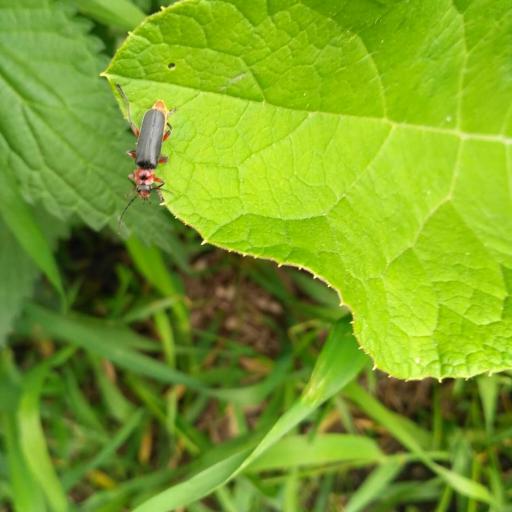
Often found patrolling flower heads in late spring and early summer, the Soldier Beetle (Cantharis rustica) is a true "garden guardian." Despite its military-sounding name and slightly intimidating, elongated shape, it is a gardener's best friend. It earns its nickname from its bright red and black coloring, which historically reminded observers of the vibrant coats worn by 17th-century British soldiers.
🔍 How to Identify
- 🪲 The "Soft" Shell: Unlike many beetles with armor-like shells, these have soft, flexible wing covers (elytra) that are a matte, velvety black or dark grey.
- 🎨 The Red Shield: Look for a bright orange-red thorax (the section behind the head) featuring a distinct, dark central spot that often looks like a smudge of ink.
- 🦵 Lanky Legs: They possess long, spindly black legs and sensitive antennae that help them navigate complex flower structures with ease.
🌲 Habitat & Ecology
- 🐝 Dual-Purpose Helpers: These beetles are exceptional multitaskers. As adults, they spend their days on flat-topped flowers (like Cow Parsley or Daisies) acting as pollinators while simultaneously hunting for aphids.
- 🍂 Underground Hunters: While the adults take to the air, the larvae live in the soil and leaf litter. They are fierce predators of garden pests, specifically targeting slugs, snails, and the eggs of other insects.
- 🌿 Preferred Haunts: You will most likely spot them in meadows, woodland edges, and gardens that have a variety of open-faced wild flowers.
⚠️ Safety & Toxicity
- ✅ Harmless Friend: Soldier Beetles are completely harmless to humans and pets. They do not sting, and while they have mandibles for eating aphids, they are not aggressive and will not bite humans.
- 👅 Bitter Defense: They produce a bitter-tasting chemical to protect themselves from birds. While not dangerous to touch, it’s best not to let curious pets try to eat them, as it may cause a minor stomach upset.
✨ Fun Fact
Soldier Beetles are famously amorous! Because they spend a large portion of their short adult life mating, they are frequently seen in pairs on flower heads, leading to the Victorian-era nickname "the Sailor Beetle"—a cheeky nod to sailors having "a partner in every port."
More Details








