Info
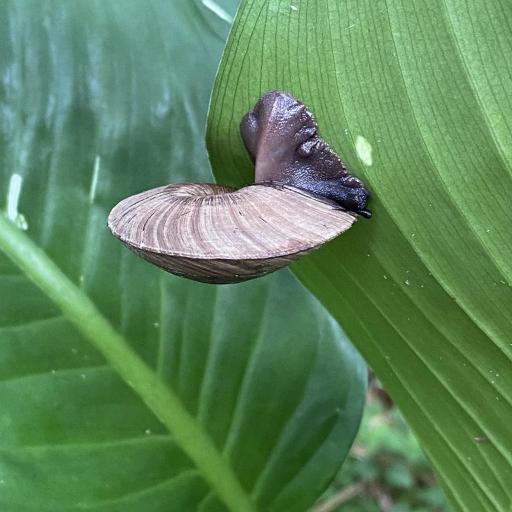
While often mistaken for a strange crawling beetle due to its dark, heavy shell, Caracolus carocolla—commonly known as the Puerto Rican Tree Snail—is actually a large land snail. This "living tank" of the Caribbean forests is a master of the vertical world, often found high up in the canopy. It plays a vital role in its ecosystem as a dedicated recycler, turning decaying matter into nutrient-rich soil.
🔍 How to Identify
- 🐚 The Disc Shell: Unlike the common garden snail, its shell is remarkably flattened and lens-shaped, looking almost like a thick, dark coin or a flying saucer.
- 🎨 Velvety Color: The shell is usually a deep chocolate brown or charcoal black, often featuring a subtle, matte texture that helps it camouflage against wet tree bark.
- 📐 Sharp Rim: If you look closely at the outer edge of the shell, it has a distinct, pinched ridge (called a "carina") that makes the shell look aerodynamic.
🌲 Habitat & Ecology
- 🌴 Tree Climbers: These snails are highly arboreal; while they hatch in the leaf litter, they spend most of their lives scaling the trunks of tropical trees like the Sierra Palm.
- 🍄 Gourmet Scavengers: They are primarily "periphyton" feeders, meaning they spend their nights grazing on the thin layers of algae, fungi, and lichens that grow on tree trunks.
- 🌧️ Rain Lovers: They are most active during high humidity or immediately after a tropical downpour, emerging from crevices to feed when the bark is slick.
⚠️ Safety & Toxicity
- ✅ Harmless Nature: These snails are "friends" of the garden and forest. They do not bite, sting, or produce any toxic secretions that harm human skin.
- 🧼 Wash Your Hands: Like all wild gastropods, they can carry microscopic parasites (such as rat lungworm) in their mucus. They are safe to observe and gently move, but you must wash your hands thoroughly afterward and ensure children do not put them near their mouths.
✨ Fun Fact
In the Luquillo Experimental Forest of Puerto Rico, scientists use Caracolus carocolla as a "bio-indicator." Because these snails are sensitive to changes in moisture and temperature, their population numbers help researchers track how the rainforest is recovering from major hurricanes!
More Details








