Info
Often overlooked due to its subtle "stone-colored" wings, Caradrina selini—commonly known as the Selini Moth—is a master of camouflage in the dry, sandy landscapes of Europe. Belonging to the Noctuidae family, these "owlet moths" are the quiet ghosts of the night, blending perfectly into the bark and soil of their habitat. While they may not have the flashy colors of a butterfly, they play a vital role as nocturnal pollinators and a food source for local bat populations.
🔍 How to Identify
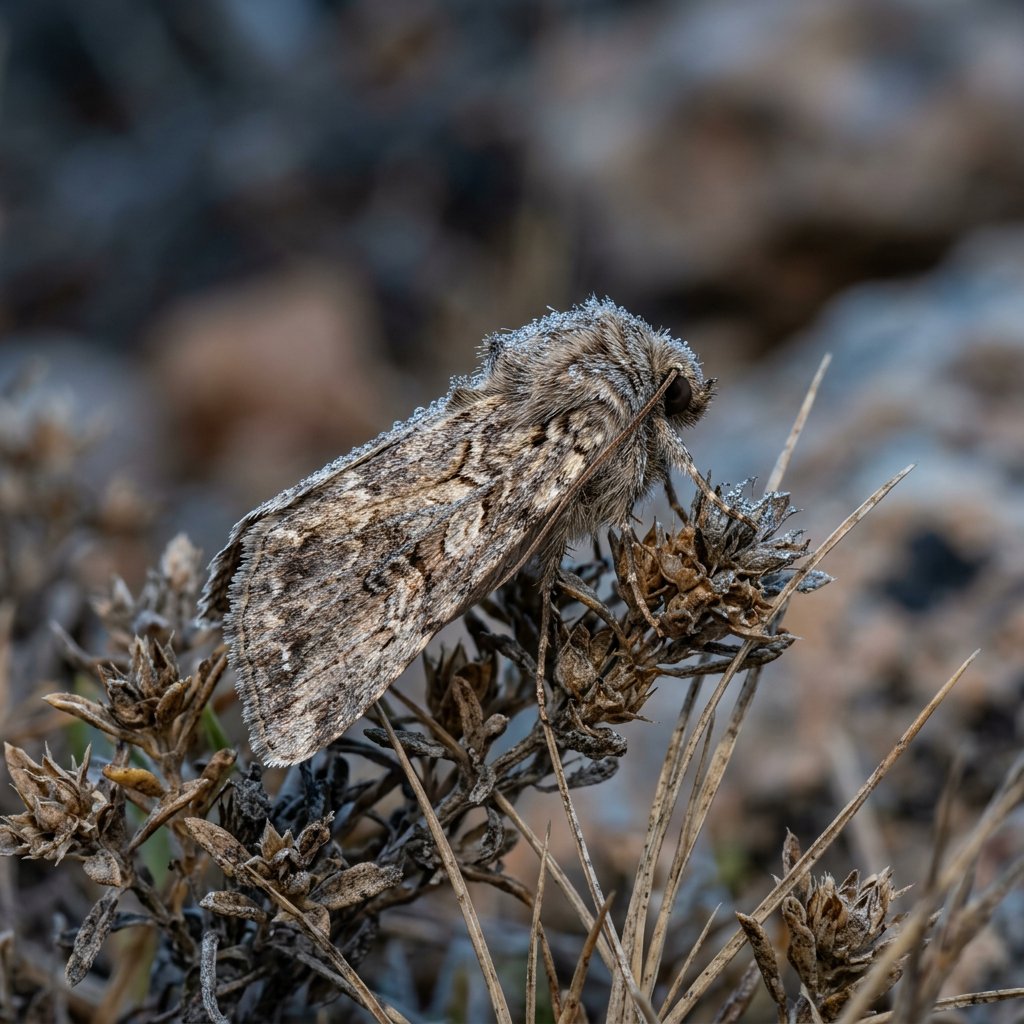
- 🎨 Forewings: These are typically a dusty, brownish-grey or "mousy" color, marked with subtle dark lines and two distinct spots—one round and one kidney-shaped—that help it disappear against sandy soil.
- ☁️ Hindwings: When it takes flight, you’ll notice much paler, almost translucent light grey or white hindwings, which create a flickering effect in the moonlight.
- 📐 Resting Posture: Like most "Noctuids," it rests with its wings folded flat over its body in a roof-like or triangular shape, mimicking a small pebble or a piece of dried debris.
🌲 Habitat & Ecology
- 🏜️ The Sand Lover: This moth prefers "xerothermic" locations—basically, spots that are warm and dry. You are most likely to spot them in sandy meadows, rocky slopes, or open grasslands where the soil gets plenty of sun.
- 🥗 A Varied Diet: As caterpillars, they aren't picky eaters. They are "polyphagous," meaning they enjoy a buffet of various low-growing plants, herbs, and grasses found in their dry habitats.
- 🌙 Night Owl: They are strictly nocturnal. While they spend their days tucked away in the thatch of grasses, they emerge at dusk to feed on nectar and are frequently drawn to artificial garden lights.
⚠️ Safety & Toxicity
- ✅ Harmless: The Selini Moth is completely safe. It possesses no sting, no bite, and does not carry any toxins that would harm humans or curious pets.
- 🌿 Garden Friendly: Unlike some of its cousins (the "cutworms"), Caradrina selini rarely reaches population levels that would cause significant damage to garden plants or agricultural crops.
✨ Fun Fact
The caterpillars of this species are surprisingly hardy; they actually spend the entire winter as larvae, hiding in the soil and waiting for the first signs of spring to finish their development and pupate!
More Details








