Info
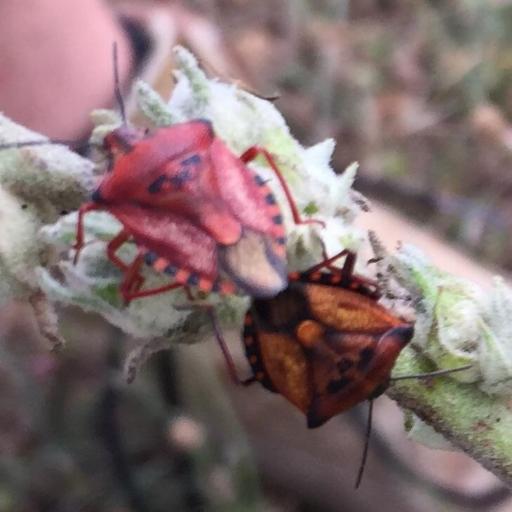
Known as the Mediterranean Shield Bug, this sun-loving insect is a common sight across Southern Europe and North Africa. With its wide, armor-like shoulders and earthy, autumnal colors, it looks like a tiny gladiator of the garden. While many people worry when they see "stink bugs," this species is generally a peaceful resident of wildflower meadows rather than a household pest.
🔍 How to Identify
- 🛡️ Shield Shape: It possesses the classic pentagonal "shield" body shape typical of the Pentatomidae family, appearing broad and flat.
- 🎨 Variable Coloration: Its color ranges from a dusty ochre to a vibrant reddish-brown, usually covered in tiny, fine black punctures (dots) that give it a textured look.
- 📐 Prominent Shoulders: The "shoulders" (pronotum) are slightly rounded but stick out prominently, often featuring a subtle orange or yellowish edge.
- 🖤 Scutellum Marks: Look for the large triangular plate on its back; it often has two small, dark depressions or spots at the top corners.
🌿 Habitat & Ecology
- 🍽️ Gourmet Diet: These bugs are "polyphagous," meaning they eat a variety of plants. They are particularly fond of the juice from the seeds and flowers of wild carrots, thistles, and thimbleweeds.
- ☀️ Sun Seeker: You will rarely find them in deep shade. They prefer open, sunny grasslands and Mediterranean scrub (maquis), where they bask on flower heads to regulate their body temperature.
- 🔄 Seasonal Shift: Depending on the generation and the heat, their color can slightly intensify, helping them camouflage against drying summer vegetation.
⚠️ Safety & Toxicity
- ✅ Harmless to Humans: The Mediterranean Shield Bug cannot bite or sting. It lacks any mechanism to harm humans or pets.
- 👃 Chemical Defense: Like its cousins, it possesses scent glands. If handled roughly or crushed, it will release a pungent, "stinky" fluid to discourage predators.
- 🌱 Garden Impact: While they do sip plant sap, they rarely gather in large enough numbers to cause significant damage to ornamental gardens or crops.
✨ Fun Fact
The Carpocoris genus is famous among entomologists for being difficult to tell apart! To distinguish the Mediterraneus from its very close relative, Carpocoris fuscispinus, experts often have to look at the exact sharpness of the "shoulder" angles and the specific shading of its wing membranes.
More Details








