Info
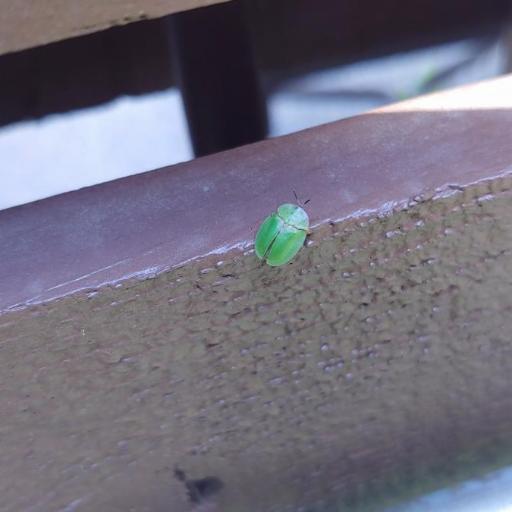
Often referred to as the Thistle Tortoise Beetle, this emerald-colored insect looks more like a tiny, animated leaf or a miniature turtle than a typical bug. Found across Europe and North America, it is a master of camouflage, blending perfectly into the greenery of its favorite snacks. While most beetles are seen as garden pests, this little tortoise is often celebrated as a natural "weed-whacker" for invasive thistles.
🔍 How to Identify
- 🐢 The Shell: It possesses a wide, flattened body with transparent edges on its wing covers (elytra) and thorax, which creates a protective "rim" similar to a tortoise shell.
- 🍃 Coloration: Usually a matte, pale green color that mimics the exact shade of a thistle leaf. Some older individuals may develop a slightly duller or brownish hue.
- 🙈 The Hidden Head: From above, you cannot see its head or legs. They are completely tucked under the broad, shield-like thorax and elytra, protecting its soft parts from predators.
- 📐 Pitting: If you look closely, the green wing covers are covered in tiny, organized punctures or "pits" that give it a slightly textured appearance.
🌲 Habitat & Ecology
- 🥗 A Thistle Specialist: Its life revolves entirely around plants in the Asteraceae family, particularly thistles like the Canada thistle or Bull thistle. It spends its entire lifecycle—from egg to adult—on these plants.
- 🛠️ Biological Ally: Because it is so effective at eating thistles, it was intentionally introduced to parts of North America and New Zealand to help control invasive weed populations naturally.
- 💩 The Fecal Shield: The larvae have a bizarre and effective defense mechanism; they carry a "shield" of their own dried waste and old skins on their backs to ward off predators like ants and birds.
⚠️ Safety & Toxicity
- 😇 Status: Completely harmless to humans and pets. They do not bite, sting, or carry diseases.
- 🌿 Garden Impact: While they might nibble on your globe thistles or sunflowers, they rarely cause enough damage to kill a healthy plant. They are generally considered "beneficial insects" because they prioritize eating weeds that most other bugs avoid.
✨ Fun Fact
The Thistle Tortoise Beetle’s larvae are the ultimate recyclers of the insect world. They have a specialized "anal fork" (a pair of hooks on their rear) that they use to hold a protective umbrella of poop over their bodies. If a predator tries to take a bite, they get a mouthful of waste instead of a juicy larva!
More Details








