Info
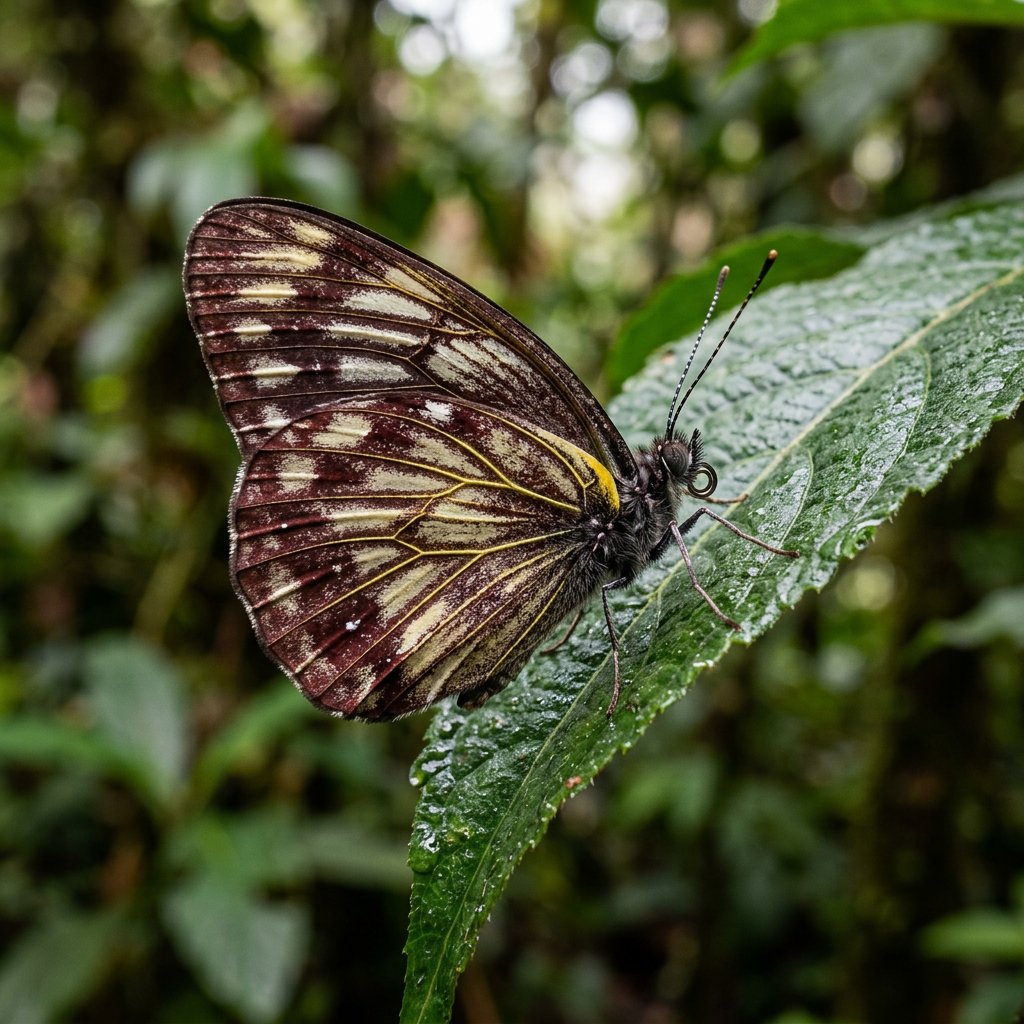
Known as the Mexican Dartwhite, Catasticta nimbice is a high-altitude traveler that flutters through the misty pine-oak forests of Mexico and Central America. Unlike the common garden butterflies we see every day, this species carries an air of mountain mystery, often found congregating near damp riverbanks or hidden forest clearings. Its elegant, monochrome palette makes it a sophisticated find for any nature enthusiast exploring the cloud forests.
🔍 How to Identify
- 🦋 Wing Patterns: The upper side of the wings features a stark contrast of creamy white or pale yellow against deep charcoal borders, punctuated by rows of small white spots near the edges.
- 📐 Geometric Darts: Look for the characteristic "dart" shapes along the margins—small, triangular dark markings pointing inward that give this butterfly its common name.
- 🎨 Intricate Underside: When at rest, the underside of the wings reveals a complex mosaic of yellow, brown, and black marbling, which provides excellent camouflage against tree bark.
🌲 Habitat & Ecology
- ⛰️ High-Altitude Specialist: This butterfly is most at home in mountain ridges and cloud forests, typically found at elevations between 1,000 and 2,500 meters where the air is cool and moist.
- 🌿 The Mistletoe Connection: While the adults sip nectar from various highland wildflowers, their caterpillars have a very specific diet; they feed almost exclusively on species of Mistletoe (Phoradendron), turning a parasitic plant into a nursery.
⚠️ Safety & Toxicity
- ✅ Harmless Observer: The Mexican Dartwhite is entirely safe for humans and pets. It does not bite, sting, or possess any known toxins that would cause irritation.
- 🦋 Eco-Friendly: As a specialized pollinator of high-altitude flora, it plays a vital role in its ecosystem and poses no threat to common backyard vegetable gardens.
✨ Fun Fact
Male Mexican Dartwhites are often seen "mud-puddling." They gather in groups on moist soil or near puddles to drink mineral-rich water. This behavior isn't just for hydration—they are actually harvesting salts and minerals that they pass on to females during mating to ensure the health of their eggs!
More Details








