Info
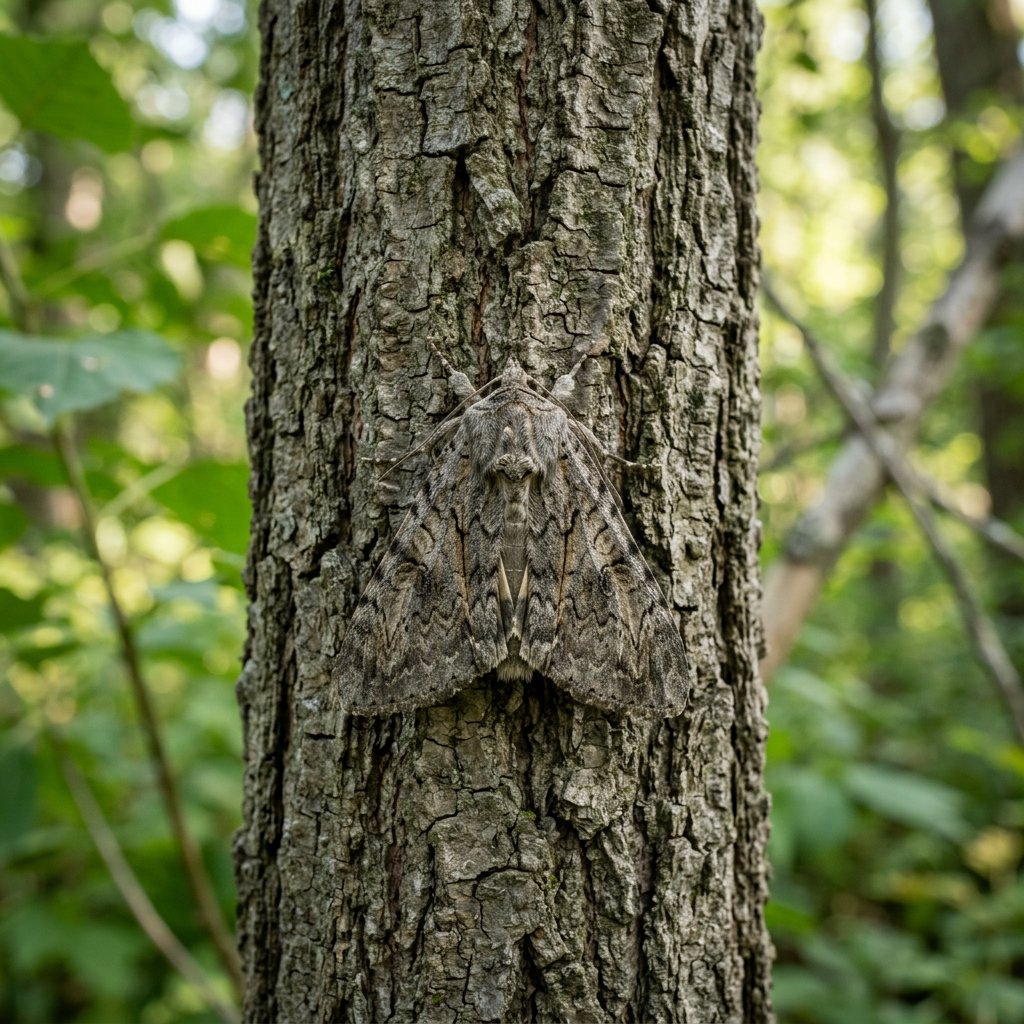
Often called the Sweetheart Underwing, this large and dramatic moth is a master of the "bait and switch." By day, it sits perfectly still against tree bark, looking like a dusty, forgotten splinter. However, the moment it is startled, it flashes a pair of brilliant, rosy-pink hindwings to startle predators. It belongs to a romantic genus of moths where many species are named after archetypes of women, such as the "Bride," "Widow," and "Sweetheart."
🔍 How to Identify
- 🦋 The Camouflage: The forewings are a complex mosaic of grey, brown, and charcoal, designed to blend seamlessly with the rough bark of Willow or Poplar trees.
- 💖 Hidden Colors: The hindwings feature bold, concentric bands of deep pink or reddish-orange contrasted with thick black stripes and a white fringe.
- 📏 Impressive Span: This is one of the larger "underwings," with a wingspan that can reach up to 9.5 centimeters (nearly 4 inches), making it a heavy and conspicuous flyer.
🌲 Habitat & Ecology
- 🍂 Willow Lovers: You will most likely find the Sweetheart Underwing near damp lowlands, riverbanks, or suburban gardens where its favorite host trees—Willows, Poplars, and Cottonwoods—are abundant.
- 🍯 A Sweet Tooth: Unlike many moths that visit flowers, the Sweetheart prefers "sugar-roping." They are attracted to fermenting tree sap and rotting fruit, often active from late summer through early autumn.
⚠️ Safety & Toxicity
- 🛡️ Completely Safe: This moth is a "gentle giant." It has no sting, no mandibles for biting humans, and carries no toxins.
- 🐾 Pet Friendly: While a large, fluttering moth might drive a cat or dog into a chasing frenzy, the Sweetheart Underwing is non-toxic and harmless if accidentally caught.
✨ Fun Fact
The genus name Catocala is derived from the Greek words kato (below) and kalos (beautiful). This literally translates to "Beautiful Underneath," perfectly describing the secret splash of color hidden beneath their drab exterior.
More Details








