Info
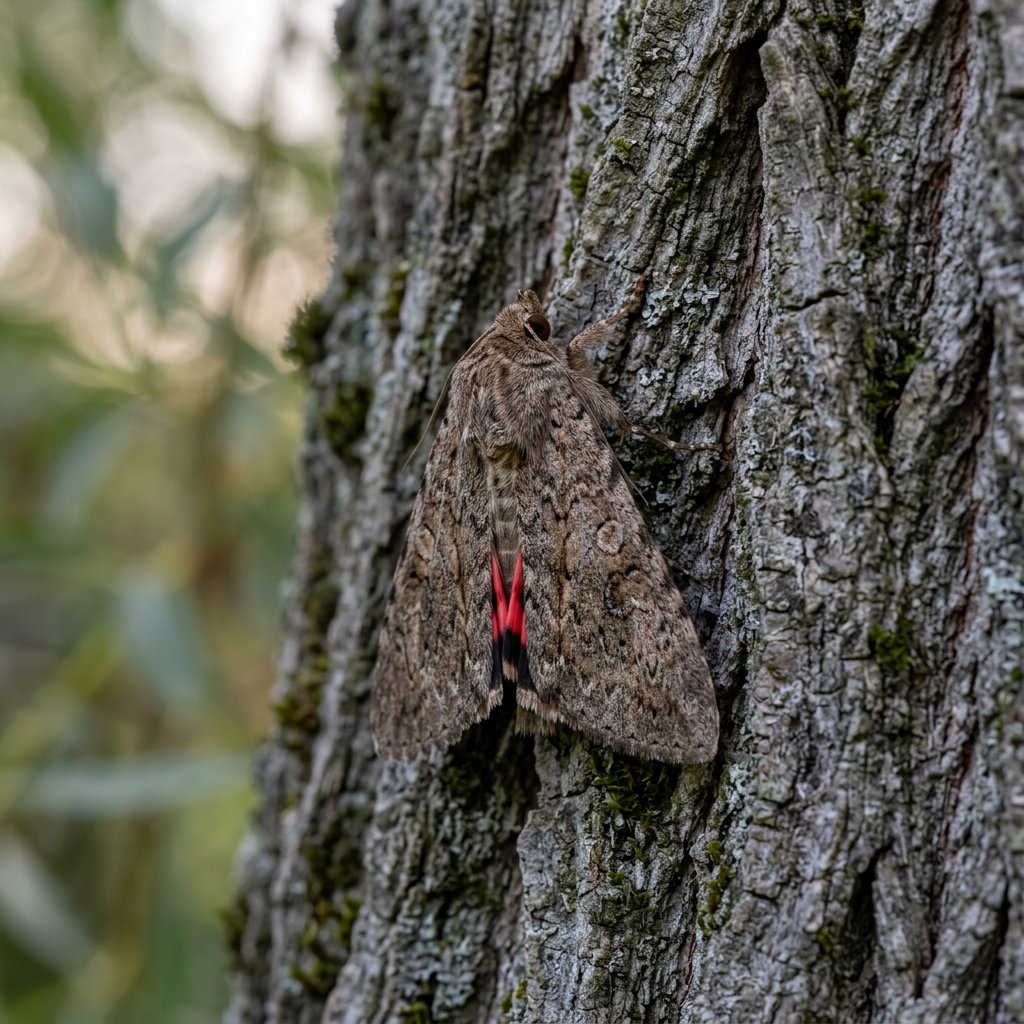
Known as the "Red Underwing," this large moth is a master of the "startle effect." By day, it rests on tree trunks, perfectly camouflaged to look like a patch of bark, but if disturbed, it flashes a pair of brilliant scarlet wings to shock potential predators. It is a classic inhabitant of European and Asian woodlands, often found near water where its favorite trees grow.
🔍 How to Identify
- 🦋 The Gray Cloak: The forewings are mottled with shades of gray, brown, and white, creating a grainy texture that mimics rough tree bark or lichen.
- 🔴 The Flash of Red: The hindwings are a vivid, deep red with two thick, jagged black bands—a feature that is usually completely hidden when the moth is at rest.
- 📐 Robust Build: This is a large, "heavy-set" moth with a wingspan reaching up to 80mm and a thick, furry thorax that helps it stay warm during cool nights.
🌲 Habitat & Ecology
- 🌳 Willows and Poplars: You are most likely to spot this moth in damp woodlands, riverbanks, or gardens that host Willow (Salix) or Poplar (Populus) trees, which serve as the primary food source for their caterpillars.
- 🌙 Sugar Seekers: Unlike many moths that only visit flowers, the Red Underwing is famously attracted to "sugar patches"—fermenting fruit or sweet sap oozing from tree wounds.
- 🪵 Bark Resting: During the day, they prefer to rest head-downwards on vertical surfaces like tree trunks, fences, or old stone walls.
⚠️ Safety & Toxicity
- 🛡️ Completely Harmless: The Red Underwing is a "friend" to gardeners. It does not bite, sting, or possess any chemical irritants.
- 🐾 Non-Toxic: If a curious pet happens to catch one, they are not toxic; however, their large size and erratic flight can be quite a surprise for a house cat!
✨ Fun Fact
- 📜 Secret Beauty: The genus name Catocala comes from the Ancient Greek words kato (behind/under) and kalos (beautiful), literally translating to "beautiful underneath."
More Details








