Info
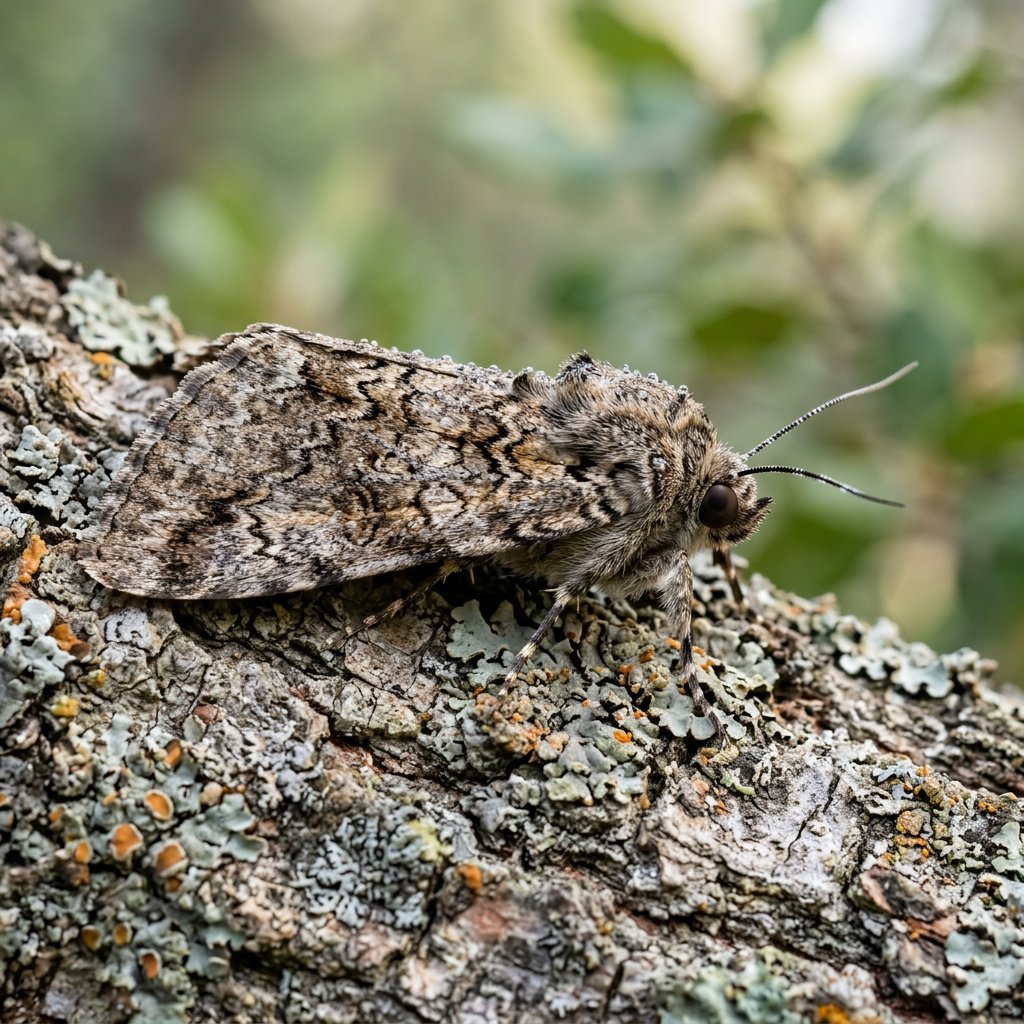
Meet the Oak Yellow Underwing, a master of disguise that hides a vibrant secret beneath its drab exterior. Often found resting on the bark of ancient trees, this moth is the ultimate "friend" of the forest—entirely harmless to humans and a fascinating example of nature’s tactical camouflage. In European folklore, moths of the Catocala genus are often called "Underwings," named for the sudden, startling flash of color they reveal when they take flight.
🔍 How to Identify
- 🦋 The Forewings: When resting, the upper wings are a mottled blend of dusty grey, charcoal, and brown. This pattern mimics lichen-covered oak bark so perfectly that the moth becomes virtually invisible to predators.
- 🌟 The Hindwings: This is the moth's signature feature. Hidden underneath the grey is a pair of brilliant, golden-yellow wings marked with two distinct, wavy black bands.
- 📐 Resting Posture: It holds its wings in a flat, roof-like triangle, completely tucking the colorful hindwings away to maintain its "bark" persona.
🌲 Habitat & Ecology
- 🌳 The Oak Connection: As its name suggests, this moth is deeply tied to oak forests. The caterpillars (larvae) feed exclusively on the leaves of various oak species (Quercus), while the adults prefer to drink fermented tree sap or nectar.
- 🦇 The "Flash" Defense: Unlike butterflies that are colorful to attract mates, the Oak Yellow Underwing uses its color for survival. If a bird spots it, the moth suddenly reveals its bright yellow wings. This "startle effect" confuses the predator for a split second, giving the moth just enough time to escape into the shadows.
⚠️ Safety & Toxicity
- 🟢 Status: Completely harmless.
- 🛡️ Details: This moth does not bite, sting, or possess any chemical irritants. They are safe to observe closely and pose no threat to curious children or household pets. Because they are strictly nocturnal, you’re most likely to encounter them near porch lights during mid-summer nights.
✨ Fun Fact
The genus name Catocala comes from the Greek words kalo (beautiful) and ischion (haunch or wing). Essentially, their scientific name translates to "beautiful underneath," a tribute to the hidden golden treasure they carry beneath their camouflage!
More Details








