Info
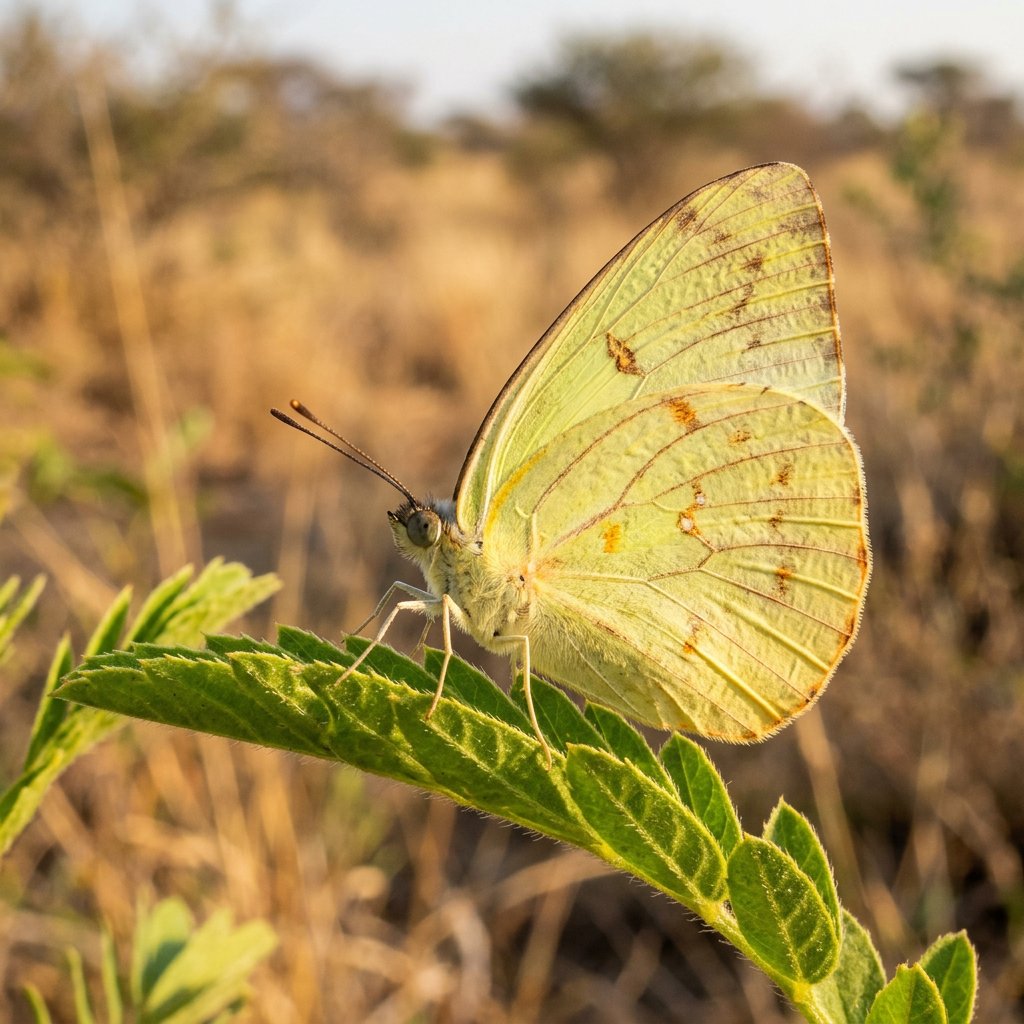
The African Emigrant (or African Migrant) is the nomad of the butterfly world, famous for its spectacular mass migrations that can involve millions of individuals. Often called the "Lemon White" in some regions, these butterflies are high-energy flyers that bring a sense of movement and life to sun-drenched landscapes. They are the ultimate sun-seekers, rarely seen on overcast days, preferring to spend their time racing across open fields and gardens.
🔍 How to Identify
- 🦋 Wing Color: The upperside is typically a pale sulfur-yellow or greenish-white. Males are usually a cleaner, solid color, while females often sport dark brownish spots along the wing edges.
- 👁️ Underwing Markings: When the wings are closed, you will notice small, circular reddish-brown spots (ocelli) with silver centers. These look like tiny, shimmering coins or water droplets.
- ⚡ Flight Pattern: They are incredibly fast and erratic flyers. Unlike many garden butterflies that flutter lazily, the African Emigrant moves in a vigorous, "purposeful" zigzagging motion.
🌲 Habitat & Ecology
- 🍃 Host Plants: These butterflies are deeply tied to the Senna (Cassia) plant family. If you have "Popcorn Senna" or similar shrubs in your area, you are almost guaranteed to see their bright green caterpillars munching on the foliage.
- 🌸 Nectar Preference: They are generalist pollinators but are particularly fond of bright, tubular flowers like Lantana, Hibiscus, and Bougainvillea. They play a vital role in the health of savanna and garden ecosystems by moving pollen across long distances.
⚠️ Safety & Toxicity
- ✅ Harmless: The African Emigrant is a "friend" to humans. They possess no stingers, and their mandibles are far too weak to bite humans or pets.
- 👐 Fragility: While they are safe to observe, their wings are covered in microscopic scales that provide color and aerodynamic lift. Handling them with bare hands can rub these scales off, hindering their ability to fly and escape predators.
✨ Fun Fact
The African Emigrant is one of the world’s most famous insect travelers. In the 1800s, naturalists recorded swarms so dense and vast that they were said to "snow" across the landscape for hours, occasionally even settling on ships miles out at sea!
More Details








