Info
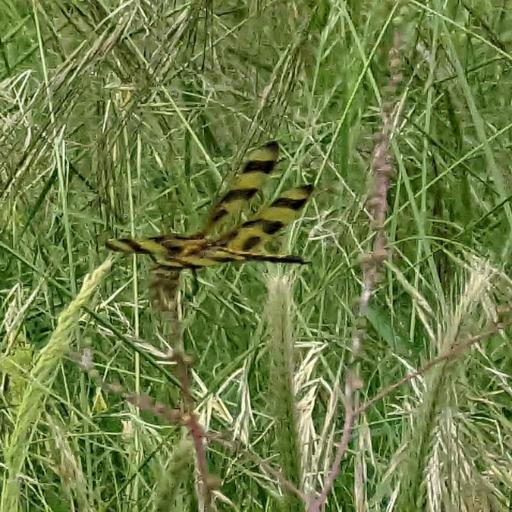
The Halloween Pennant (Celithemis eponina) is one of the most striking dragonflies you’ll ever spot near a pond or marsh. While its name might sound spooky, it actually refers to its vibrant orange-and-black wings that resemble festive pennant flags fluttering in the breeze. Often mistaken for a butterfly because of its colorful wings and flight pattern, this insect is a graceful aerial acrobat and a true "friend" to any gardener.
🔍 How to Identify
- 🎃 Distinctive Wings: Unlike most dragonflies with clear wings, this species has translucent orange wings decorated with bold, dark-brown bands.
- 🚩 The "Pennant" Pose: It has a unique habit of perching at the very tip of tall grasses or thin stems, swaying back and forth in the wind like a tiny flag.
- 🖌️ Wing Spots: Look for small, colorful spots (called pterostigmas) at the very tips of the wings, which are usually a bright reddish-orange in adults.
🌲 Habitat & Ecology
- 🦟 The Mosquito Hunter: This dragonfly is a voracious predator. It spends its day perched high on vegetation, darting out to snatch mosquitoes, gnats, and flies right out of the air.
- 🌊 Marshland Resident: They prefer the edges of sun-drenched ponds, lakes, and marshes with plenty of "emergent" vegetation (plants that grow out of the water) to use as hunting platforms.
- 🌬️ Wind-Resistant: While other dragonflies might hide during a breeze, the Halloween Pennant loves the wind, using its incredible grip to stay anchored to swaying stems.
⚠️ Safety & Toxicity
- ✅ Harmless Friend: The Halloween Pennant is completely harmless to humans. They do not sting, and they lack the equipment to bite unless someone were to physically catch and mishandle them.
- 🐾 Pet & Child Safe: They are a delight to watch and pose no threat to curious pets or children. In fact, they help protect your family by naturally reducing the local mosquito population.
✨ Fun Fact
Unlike many dragonflies that need to land to rest, the Halloween Pennant is famous for "obelisking"—on very hot days, it raises its abdomen straight up toward the sun to minimize the surface area exposed to heat, essentially acting as its own biological parasol!
More Details








