Info
The Arizona Bark Scorpion is the most famous—and feared—arachnid of the American Southwest. Unlike its burrowing cousins, this agile climber is often found scale-shifting across vertical walls or hiding under tree bark, earning it the nickname "The Sculptured Scorpion." While its small, delicate frame might seem unintimidating, it is a master of the desert night that commands significant respect.
🔍 How to Identify
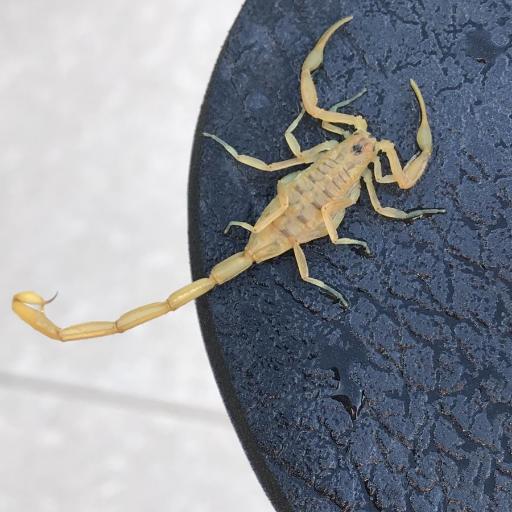
- 🎨 Uniform Color: They are typically a light tan or straw-yellow color throughout, lacking the dark stripes or patterns found on other common desert scorpions.
- 🦂 Slender Profile: Both the body and the tail are remarkably thin and elongated. When resting, they often curl their tail horizontally to the side rather than over their back.
- 👐 Delicate Pincers: Their pincers (pedipalps) are very long and thin, resembling needle-nose pliers rather than the bulky, rounded claws of larger scorpion species.
🌵 Habitat & Ecology
- 🧗 Expert Climber: Unique among scorpions, this species has specialized "toes" that allow it to scale vertical surfaces. You are just as likely to find them on a ceiling or a brick wall as you are on the ground.
- 🏚️ Human Coexistence: They are highly attracted to moisture and cool shade, often leading them into homes, woodpiles, or irrigation boxes during the heat of the day.
- 🦗 Pest Control: They serve as vital nocturnal predators, keeping populations of crickets, roaches, and beetles in check using their lightning-fast sting.
⚠️ Safety & Toxicity
- 🚨 Status: CRITICAL DANGER. This is the most venomous scorpion in North America. While a sting is rarely fatal to healthy adults, it is a medical emergency for others.
- 🐶 Who is at Risk: Small children, the elderly, and pets are at the highest risk for severe reactions. The venom is neurotoxic, causing intense pain, numbness, and sometimes respiratory distress. Always wear gloves when moving wood or rocks in their territory.
✨ Fun Fact
🔦 Natural Neon: Despite their camouflage, these scorpions contain a protein in their exoskeleton that causes them to glow a bright, ghostly cyan under a UV (black) light. Desert hikers often use "blacklight flashlights" to spot them from several yards away!
More Details








