Info
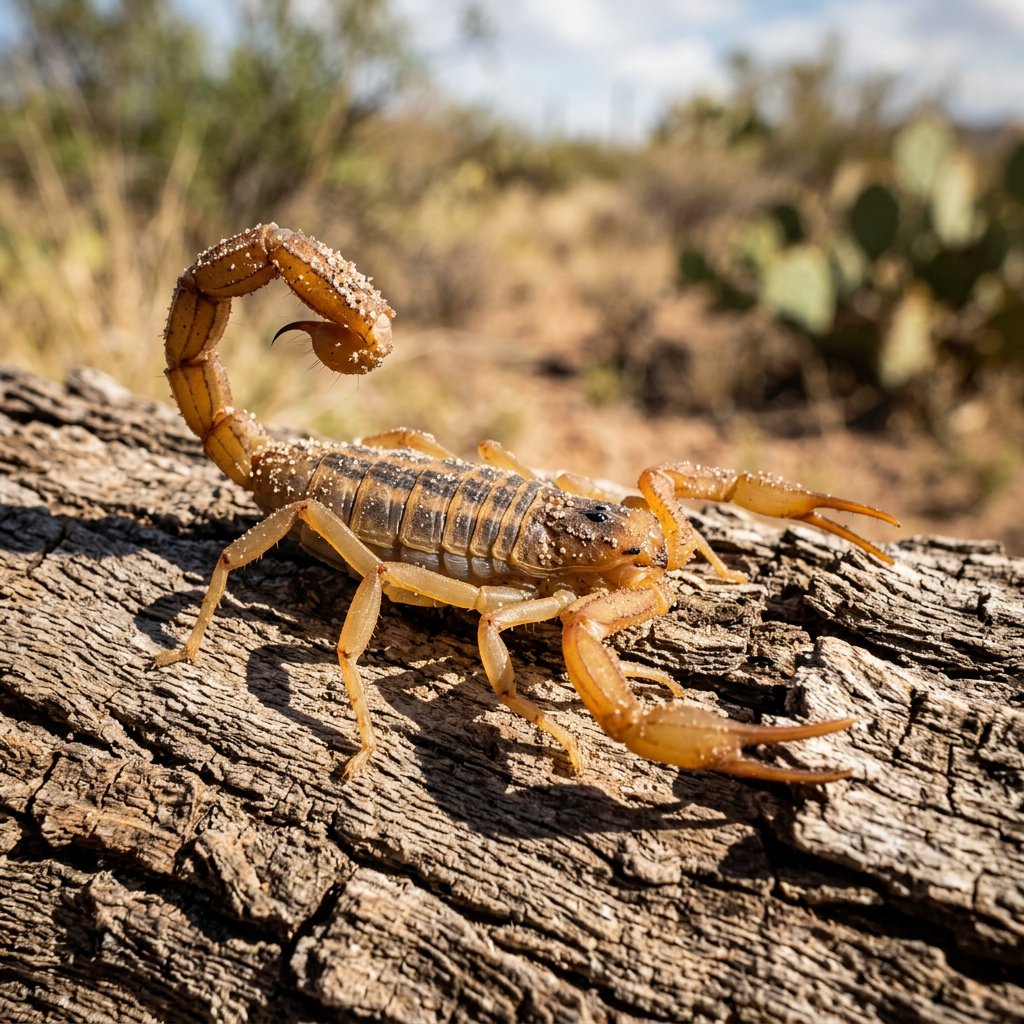
Often called the "Texas Bark Scorpion," this is the most common scorpion species encountered across the central United States and northern Mexico. While its sudden appearance in a bathroom sink or under a backyard rock might cause a fright, this resilient arachnid is a fascinating nocturnal predator that has mastered the art of survival in both rugged forests and suburban homes.
🔍 How to Identify
- 🦂 The Stripes: Look for two distinct dark, longitudinal stripes running down its pale tan or yellowish back (carapace).
- 📏 Slender Build: It has a relatively thin body and long, slender pincers (pedipalps) compared to the "bulky" look of desert-dwelling scorpions.
- 💡 Neon Glow: Like its relatives, it possesses a special protein in its exoskeleton that causes it to glow a brilliant, eerie neon green-blue under ultraviolet (black) light.
🌲 Habitat & Ecology
- 🧗 The Climber: Unlike many scorpions that stay burrowed in the sand, the Striped Bark Scorpion is an expert climber. It is frequently found under the bark of trees, on rock walls, and inside attics or crawlspaces.
- 🦗 Natural Exterminator: It plays a vital role in the ecosystem by hunting crickets, roaches, and spiders. It uses its pincers to hold prey steady before delivering a quick, paralyzing sting with its tail.
⚠️ Safety & Toxicity
- 🚫 Sting Profile: Its sting is venomous and produces immediate, sharp pain often compared to that of a hornet or wasp. The area may feel numb or tingly for several hours.
- 🐾 Risk Level: While generally not life-threatening to healthy adults, the venom can be dangerous to small children, the elderly, or pets. If you live in their range, always shake out your boots and gardening gloves before putting them on!
✨ Fun Fact
- 🤱 Backpack Babies: Female Striped Bark Scorpions give birth to live young. Once born, the tiny, translucent "scorplings" climb onto their mother's back and ride there for several weeks until they are strong enough to hunt on their own.
More Details








