Info
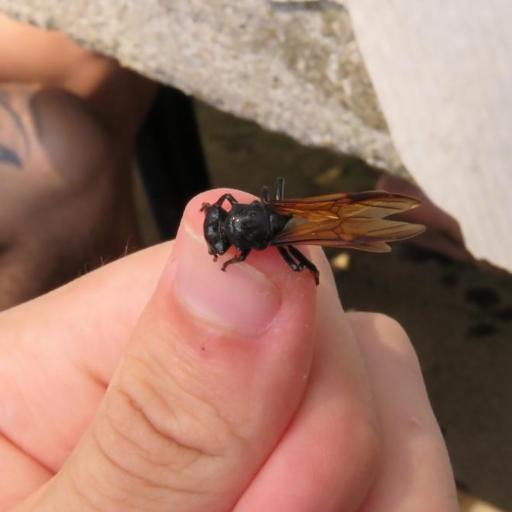
Known as the Giant Turtle Ant, this insect looks like a tiny, jet-black tank patrolling the tropical canopy. While their spiked armor and "helmeted" heads might look intimidating, they are famous in the scientific world for a much more graceful feat: skydiving. These ants are masters of "directed aerial descent," meaning if they fall from a high branch, they can glide mid-air to steer themselves back to the safety of the tree trunk.
🔍 How to Identify
- 🛡️ Heavy Armor: Their entire body is covered in a thick, pitted exoskeleton that feels like textured metal, designed to withstand the jaws of predators.
- ⚔️ Thoracic Spines: Look for sharp, prominent spines protruding from the corners of their mid-section (thorax) and the rear, giving them a jagged, prehistoric silhouette.
- 👷 The "Turtle" Head: They have a broad, flattened head with deep grooves on the sides where they can tuck their antennae away, protecting their most sensitive organs during a fight.
🌲 Habitat & Ecology
- 🌳 High-Rise Living: These ants are strictly arboreal, meaning they spend their entire lives in the treetops of Central and South American rainforests, rarely ever touching the forest floor.
- 💩 Ecological Scavengers: They play a vital role in the ecosystem by cleaning up the canopy, feeding on everything from floral nectar and extrafloral nectaries to bird droppings and small carrion.
- 🏗️ Living Doors: In some related species, specialized soldiers use their flat, disc-shaped heads to act as "living doors," physically plugging the entrance to their nest to keep out invaders.
⚠️ Safety & Toxicity
- 🛡️ Passive Defenders: Cephalotes atratus is not an aggressive species. Their primary strategy is to "hunker down" and rely on their thick armor rather than swarming or biting.
- 🐝 The Sting: While they do possess a small stinger, it is relatively weak compared to their cousins like the Fire Ant or Bullet Ant. They are considered harmless to humans and pets.
✨ Fun Fact
When falling from a tree, these ants don't just tumble; they lead with their hind legs and use their flattened bodies like a rudder to perform a 180-degree turn in mid-air, ensuring they land back on the trunk instead of the dangerous forest floor!
More Details








