Info
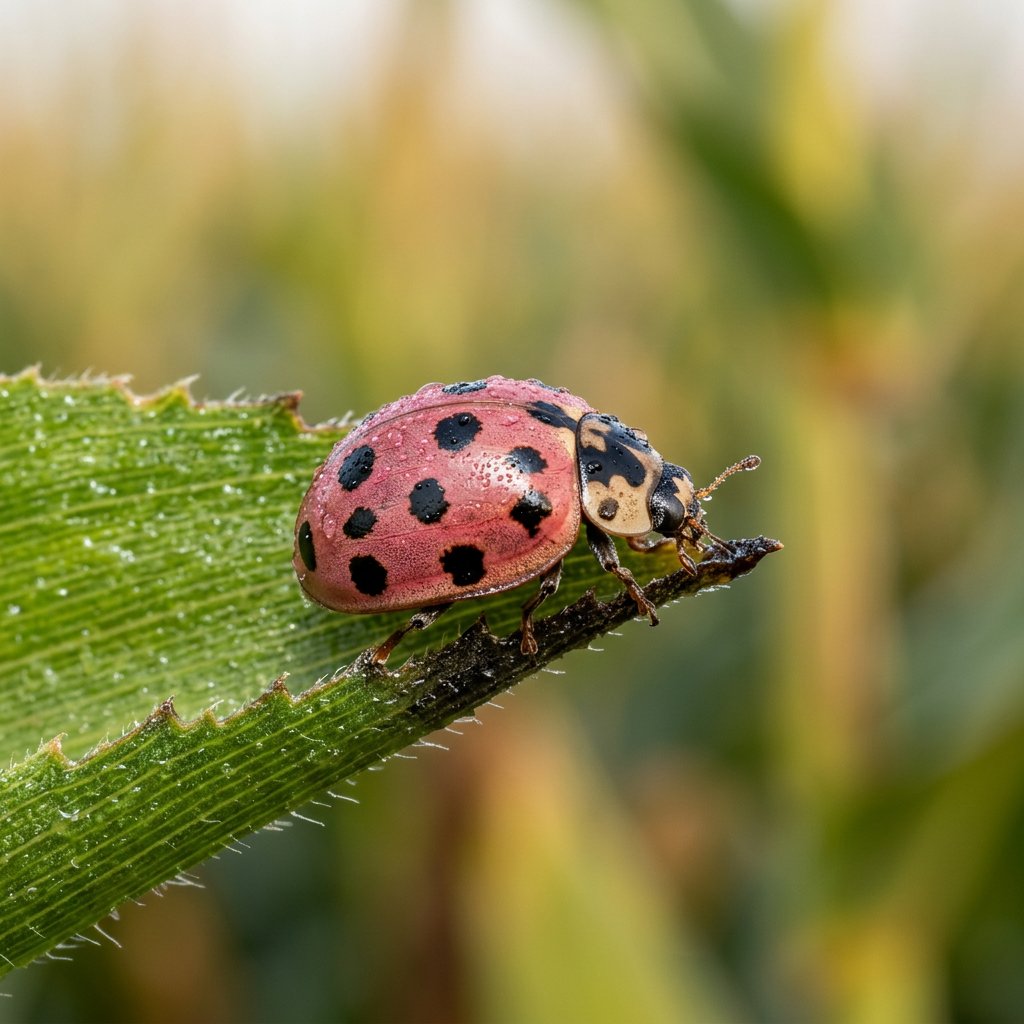
Meet the Spotted Lady Beetle, a slender and sophisticated cousin of the common round ladybug. Known scientifically as Ceratomegilla, these beetles are the unsung heroes of the garden, often referred to as "The Aphid Avengers" for their relentless appetite for pests. Unlike the typical dome-shaped ladybugs you see in children’s books, these beetles have a more streamlined, oval silhouette that helps them navigate through dense foliage with ease.
🔍 How to Identify
- 🐞 Elongated Body: Unlike the classic round ladybug, Ceratomegilla species have a noticeably more oval, stretched-out body shape.
- 🎨 Color Palette: They typically sport bright orange to deep red wing covers (elytra) adorned with distinct black spots, which serve as a "stop sign" to predators.
- 🖼️ The Pronotum Pattern: The area just behind the head (the pronotum) is usually black with prominent white or cream-colored margins, often resembling a pair of "eyes" or a small mask.
🌲 Habitat & Ecology
- 🍽️ The Aphid Hunter: These insects are high-tier predators in the garden ecosystem. They primarily feed on aphids, but unlike some picky eaters, they will also consume mites, scale insects, and even some plant pollen when prey is scarce.
- 🏘️ Social Sleepers: One of their most fascinating behaviors is their tendency to aggregate. During late autumn, you might find hundreds of them huddling together under tree bark or in rock crevices to stay warm throughout the winter.
- 🌾 Agricultural Ally: Because they aren't afraid of open spaces, you’ll frequently find them in cornfields, wheat, and alfalfa, where they act as a natural, chemical-free pesticide for farmers.
⚠️ Safety & Toxicity
- 🟢 Friend or Foe: They are 100% "Friend." These beetles are completely harmless to humans and do not sting or carry diseases.
- 🛡️ Reflex Bleeding: If they feel threatened, they may omit a tiny drop of yellow fluid from their leg joints. This is "reflex blood," which smells foul and tastes bitter to birds, but it is harmless to humans (though it might leave a small, temporary stain on your skin).
- 🐶 Pet Safety: They are non-toxic to pets, though a dog or cat that eats a large number might experience a mild stomach upset due to the beetle's defensive chemicals.
✨ Fun Fact
When ladybugs like Ceratomegilla are in their larval stage, they look nothing like the adults—they actually resemble tiny, spiky black-and-orange alligators! One single larva can eat up to 400 aphids before it even turns into a beetle.
More Details








