Info
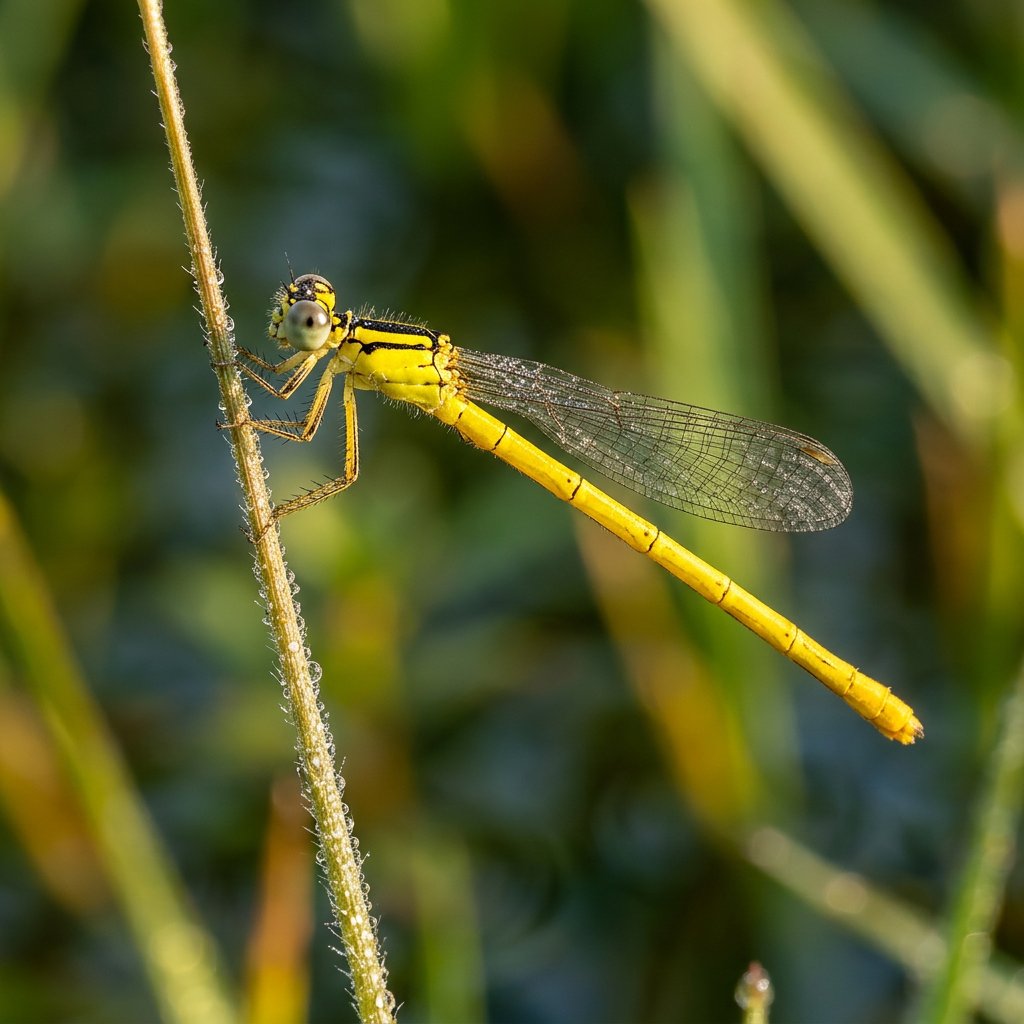
Often called the Coromandel Marsh Dart, this vibrant damselfly is like a splash of liquid sunshine hovering over the wetlands of South Asia. It is one of the most common damselflies found in gardens and parks, instantly recognizable by its brilliant "citron-yellow" body. While they might look delicate, they are highly efficient hunters that play a vital role in keeping backyard mosquito populations in check.
🔍 How to Identify
- 🎨 The "Citron" Glow: Adult males are famous for their bright, lemon-yellow abdomens and olive-green thoraxes, making them look like glowing neon sticks.
- 👀 Large Compound Eyes: They possess prominent, rounded eyes that are typically olive-green on top and paler below, providing a nearly 360-degree field of vision.
- 📏 Slender Resting Posture: Unlike dragonflies that rest with wings spread wide, this damselfly holds its clear, veined wings folded vertically over its back when it settles on a leaf.
🌲 Habitat & Ecology
- 💧 Water Lovers: You will almost always find them near stagnant or slow-moving water, such as garden ponds, marshes, and irrigation ditches, where they lay their eggs on aquatic plants.
- 🦟 The Mosquito Shredder: They are voracious predators of small insects. They act as a natural pest control, snagging flies, gnats, and mosquitoes right out of the air or off the surface of leaves.
- 🌿 Low-Level Flyers: Unlike many insects that soar high, the Marsh Dart prefers to fly low among the grass and weeds, staying close to the safety of the vegetation.
⚠️ Safety & Toxicity
- ✅ Completely Harmless: The Coromandel Marsh Dart is a "friend" to humans. They do not have a stinger, and despite their pointed "tail," they cannot sting you.
- 🛡️ Non-Aggressive: They are shy creatures that will fly away if approached. They have no venom and are not known to bite humans, even if handled gently.
✨ Fun Fact
Damselflies like the Coromandel Marsh Dart have been around for over 250 million years—meaning their ancestors were flying around long before the first Tyrannosaurus rex ever walked the earth!
More Details








