Info
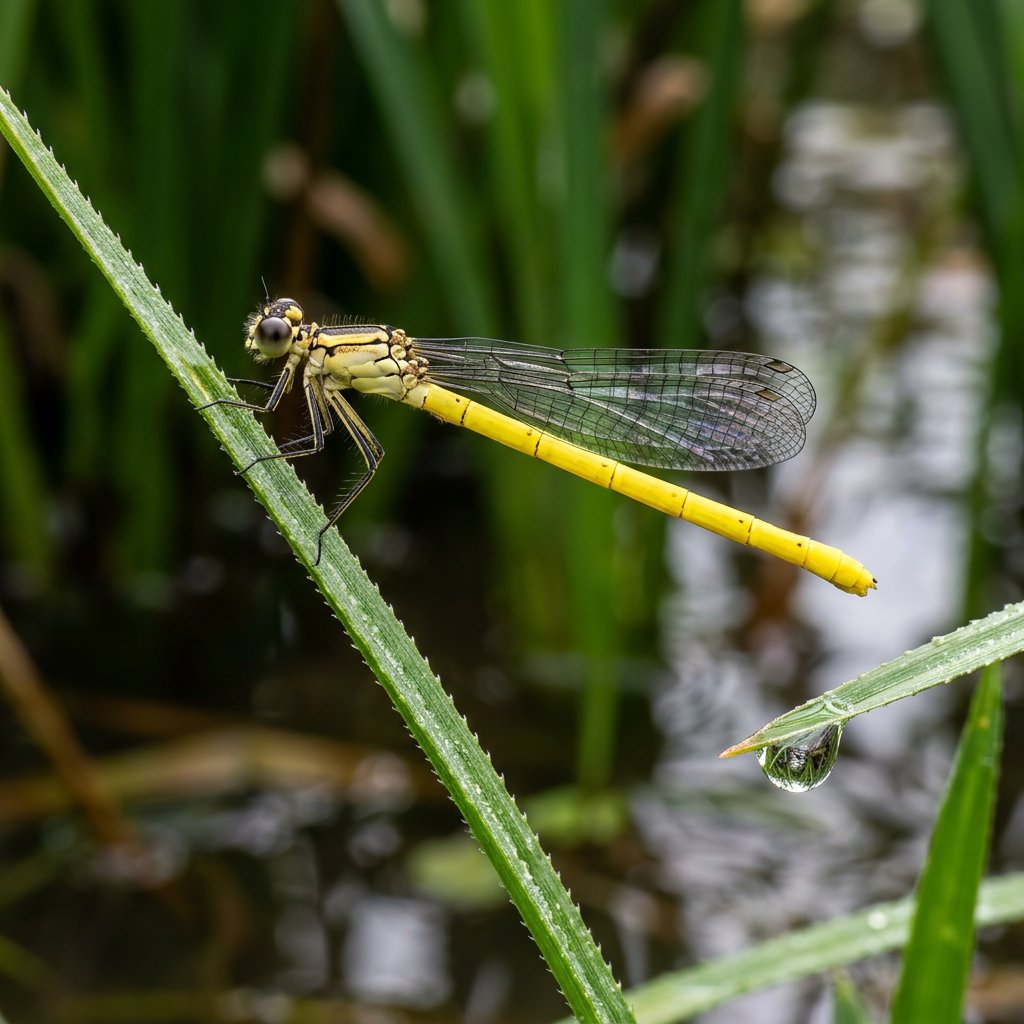
Known as the Common Orange-damsel, this insect looks like a tiny, glowing ember dancing over the water. It is one of the most widespread damselflies across Africa and parts of the Middle East, often acting as a splash of neon orange against the green reeds of a backyard pond. While they belong to the same order as dragonflies, these "flying needles" are much more delicate and tend to hug the shoreline rather than patrol the open sky.
🔍 How to Identify
- 🎨 The "Fire" Tail: Males are famous for their brilliant, unspotted orange-to-red abdomens that glow intensely in direct sunlight.
- 👐 Parallel Wings: Unlike dragonflies that rest with wings spread wide, the Orange-damsel holds its clear, veined wings folded together vertically over its back when resting.
- 👀 Barbell Eyes: They have large, compound eyes situated on the sides of their heads, giving them a "dumbbell" appearance when viewed from above.
- 🌿 Subtle Females: Females are less flashy, often appearing in shades of olive-green, brown, or a muted orange to stay camouflaged while laying eggs.
🌲 Habitat & Ecology
- 🦟 The Mosquito Hunter: Don't let their fragile looks fool you—they are voracious predators. They specialize in "gleaning," which means they snatch small flies and mosquitoes directly off leaves or out of the air.
- 💧 Still-Water Specialists: They prefer the quiet life. You’ll find them around stagnant or slow-moving water, especially where there is plenty of floating vegetation or tall grass for them to perch on.
- 🧗 Percher Behavior: Unlike their dragonfly cousins who fly for hours, this damselfly prefers to sit and wait, making short, jerky flights to grab a snack before returning to its favorite reed.
⚠️ Safety & Toxicity
- 🛡️ Harmless to Humans: Despite the pointed appearance of their long tails, they do not have a stinger. They are completely incapable of stinging humans or pets.
- 🦟 Garden Friend: They are considered highly beneficial. By patrolling your garden or pond, they help naturally reduce the population of biting midges and mosquitoes.
✨ Fun Fact
When these damselflies mate, they form a "mating wheel" that looks like a perfect heart shape. The male uses the tip of his abdomen to clasp the female behind her head, and they often fly together in this tandem position—a behavior known as "contact guarding"—to ensure other males don't interfere while she lays her eggs.
More Details








