Info
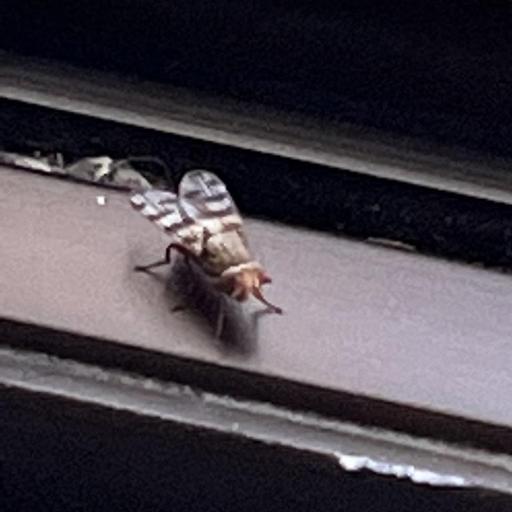
Often mistaken for a common housefly at a distance, Ceroxys latiusculus is a sophisticated member of the Picture-winged Fly family. These insects are nature’s little artists, sporting intricate, dark patterns on their wings that look like delicate calligraphy. They are generally neutral garden residents, more interested in sunbathing on leaves and performing "dances" than bothering humans.
🔍 How to Identify
- 🎨 The Wings: The most striking feature is the transparent wings marked with bold, dark brown or black bands and "ink blot" spots.
- 🔘 The Body: They possess a robust, grayish-tan or silvery body, often with faint longitudinal stripes running down the thorax.
- 👀 The Head: They have large, reddish-brown compound eyes and a characteristic wide face typical of the Ulidiidae family.
🌲 Habitat & Ecology
- 🌿 Plant Lovers: You will usually spot them resting on the foliage of tall grasses, shrubs, or garden vegetables. They are particularly fond of moist environments where they can find nectar or plant exudates.
- 💃 Semaphore Behavior: These flies are famous for "wing waving." They rhythmically move their patterned wings back and forth like a signalman, a behavior used to communicate with potential mates or to warn off rivals.
- ♻️ Life Cycle: Their larvae (maggots) typically develop in decaying vegetable matter or under the bark of trees, playing a minor role in the decomposition cycle.
⚠️ Safety & Toxicity
- ✅ Status: Completely harmless.
- 🛡️ No Bite or Sting: Unlike horseflies or mosquitoes, Ceroxys latiusculus does not possess mouthparts capable of biting humans, nor do they have a stinger.
- 🐾 Pet Safety: They are non-toxic and pose no threat to curious dogs or cats who might try to catch them.
✨ Fun Fact
The intricate patterns on their wings aren't just for show; some researchers believe that when the fly waves its wings, the spots mimic the legs of a jumping spider. This "bait and switch" tactic confuses real spiders and birds, giving the fly a chance to escape!
More Details








