Info
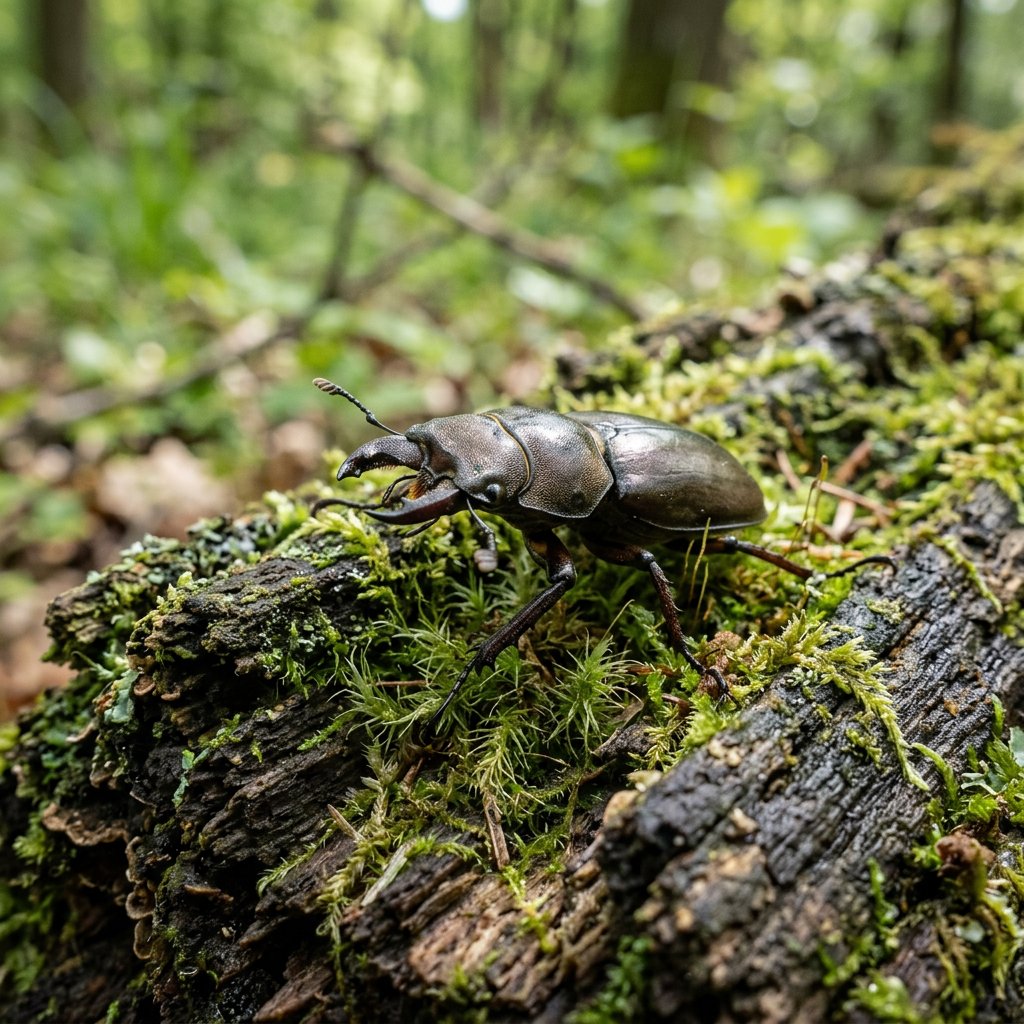
While you may have come across this name looking for a plant, Ceruchus chrysomelinus is actually a rare and fascinating beetle known as the Small Stag Beetle. This tiny "armored knight" is a relict of ancient, untouched European forests. Often called a "jewel of the rot," it spends most of its life hidden away, playing a vital role in turning fallen giants of the forest back into nutrient-rich soil.
🔍 How to Identify
- 🪲 The Mandibles: Unlike their giant cousins, the males have modest but distinct "antler-like" jaws (mandibles) that curve inward, while females have much smaller, functional mouthparts for chewing wood.
- ✨ Body Texture: Its body is a deep, glossy black or dark chocolate brown, featuring distinctive deep longitudinal grooves (striations) running down its wing covers (elytra).
- 📏 Size & Shape: It is relatively small for a stag beetle, usually measuring between 10mm and 15mm, with a sturdy, cylindrical body shape perfectly adapted for crawling through tight wooden galleries.
🌲 Habitat & Ecology
- 🪵 The Deadwood Specialist: This beetle is a "saproxylic" species, meaning it depends entirely on decaying wood. It specifically seeks out very old, moist logs—usually coniferous trees like Spruce or Fir, but occasionally Birch—that have been softened by specific types of white-rot fungi.
- 🕰️ A Long Childhood: The larvae live deep inside rotten logs for two to three years, slowly munching on decaying wood fibers. Because they need such specific conditions, they are rarely found in "managed" young forests, making them an indicator of a healthy, ancient ecosystem.
⚠️ Safety & Toxicity
- ✅ Status: Completely harmless "Friend."
- 🤏 Details: While the male’s mandibles look like they could pinch, they are far too small and weak to break human skin. They possess no stingers, no venom, and are not considered garden pests as they only eat wood that is already dead and decaying.
✨ Fun Fact
The Small Stag Beetle is considered a "biological relict." This means it is a survivor from a prehistoric era when Europe was covered in massive, continuous primeval forests. Today, finding one is a big deal for conservationists—it's like finding a living fossil in your backyard!
More Details








