Info
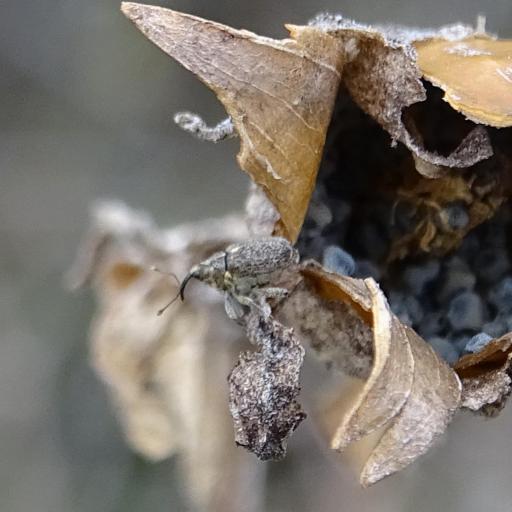
Known as the Cabbage Stem Weevil, this tiny beetle is a master of disguise and a persistent visitor to vegetable patches. While it may look like a miniature, armored elephant due to its long "snout," it is a significant figure in the world of agriculture, specifically known for its love of kale, cabbage, and rapeseed. In the garden, it is often a silent traveler, moving undetected until its offspring begin their work inside the plant stems.
🔍 How to Identify
- 🐘 The Snout (Rostrum): Features a long, slender, and downward-curved snout used for both feeding and preparing a spot to lay eggs.
- ⚪ The "White Star": A very distinctive, small white spot (the scutellum) is located right at the base of the wing covers, standing out against its darker body.
- 🛡️ Textured Armor: Its body is covered in fine, grayish-brown scales that give it a dusty, matte appearance, helping it blend into soil and dried leaves.
- 📏 Miniature Scale: It is incredibly small, usually measuring only 2.5 to 3.5 millimeters in length, making it easy to miss with the naked eye.
🌲 Habitat & Ecology
- 🥬 The Brassica Specialist: You will almost exclusively find this weevil on plants in the mustard family (Brassicaceae), including cauliflower, cabbage, broccoli, and oilseed rape.
- 🏗️ Internal Engineers: Unlike insects that eat leaves from the outside, the larvae of this weevil hatch and tunnel directly into the leaf stalks and stems, living their early lives in a protected, "indoor" environment.
- 🍂 Winter Sleep: Adults spend the winter hiding in leaf litter or hedge banks, emerging in early spring when temperatures rise to find fresh garden greens.
⚠️ Safety & Toxicity
- 🟢 Harmless to Humans: This insect is completely non-toxic and lacks any ability to sting or bite people or pets.
- 🥀 Garden Foe: While safe for you, it is a "foe" to the garden. Heavy infestations can lead to weakened stems, stunted growth, and secondary fungal infections in your vegetable crops.
✨ Fun Fact
When threatened, the Cabbage Stem Weevil is a dramatic actor; it will tuck its legs in and drop to the ground, remaining perfectly still to "play dead" (a behavior called thanatosis) until it feels the danger has passed.
More Details








