Info
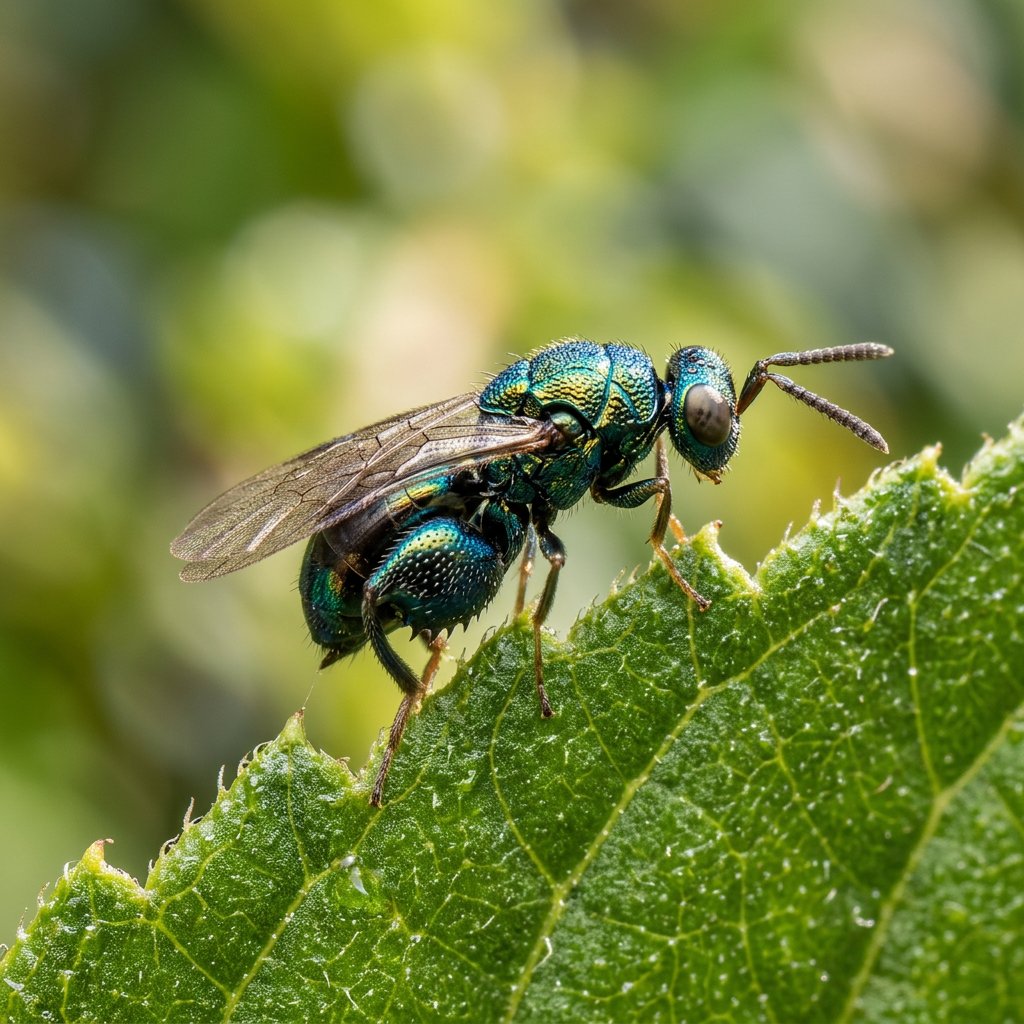
Often called "Hock-legged Wasps," members of the Chalcididae family are the tiny, muscular bodybuilders of the insect world. While they might look like miniature alien invaders with their dramatically oversized thighs, they are actually silent guardians of the garden. These solitary wasps spend their lives hunting for the larvae of common pests, making them one of nature’s most effective—and overlooked—pest control teams.
🔍 How to Identify
- 🦵 The "Bodybuilder" Legs: Their most striking feature is the massively swollen hind legs (the femur), which often have small "teeth" along the bottom edge.
- 📏 Microscopic Scale: Most species are incredibly small, often ranging from 2mm to 7mm, requiring a keen eye or a magnifying glass to see their intricate details.
- 📉 Simplified Wings: Unlike common yellowjackets, their wings have very few veins, appearing almost clear and delicate compared to their robust, often pitted (punctured-looking) bodies.
🌲 Habitat & Ecology
- 🦋 The Ultimate Parasitoids: Chalcid wasps do not build nests. Instead, they are "parasitoids," meaning they lay their eggs inside the pupae or larvae of other insects, such as moths, flies, and beetles.
- 🌸 Sugar Seekers: While the young are carnivorous, the adults are peaceful nectar-feeders. You’ll often find them hovering around "umbellifer" flowers (like dill, fennel, or Queen Anne's Lace) where they can easily reach the shallow nectar.
- 🏠 Common Locations: They are found worldwide, typically vibrating their wings on the undersides of leaves or patrolling garden soil in search of a host.
⚠️ Safety & Toxicity
- 🛡️ Completely Harmless: Despite being wasps, Chalcidids are non-aggressive and do not have a defensive sting. Their "stinger" is actually an ovipositor, designed strictly for laying eggs in other insects, not for attacking humans.
- 🐶 Pet Safe: They pose no threat to dogs, cats, or children. In fact, having them in your yard is a sign of a healthy, balanced ecosystem where chemical pesticides aren't needed.
✨ Fun Fact
Those massive "Schwarzenegger" back legs aren't just for show! Scientists believe the wasps use their powerful hind legs to grip and hold onto struggling host insects or to lever themselves into position while they deposit their eggs.
More Details








