Info
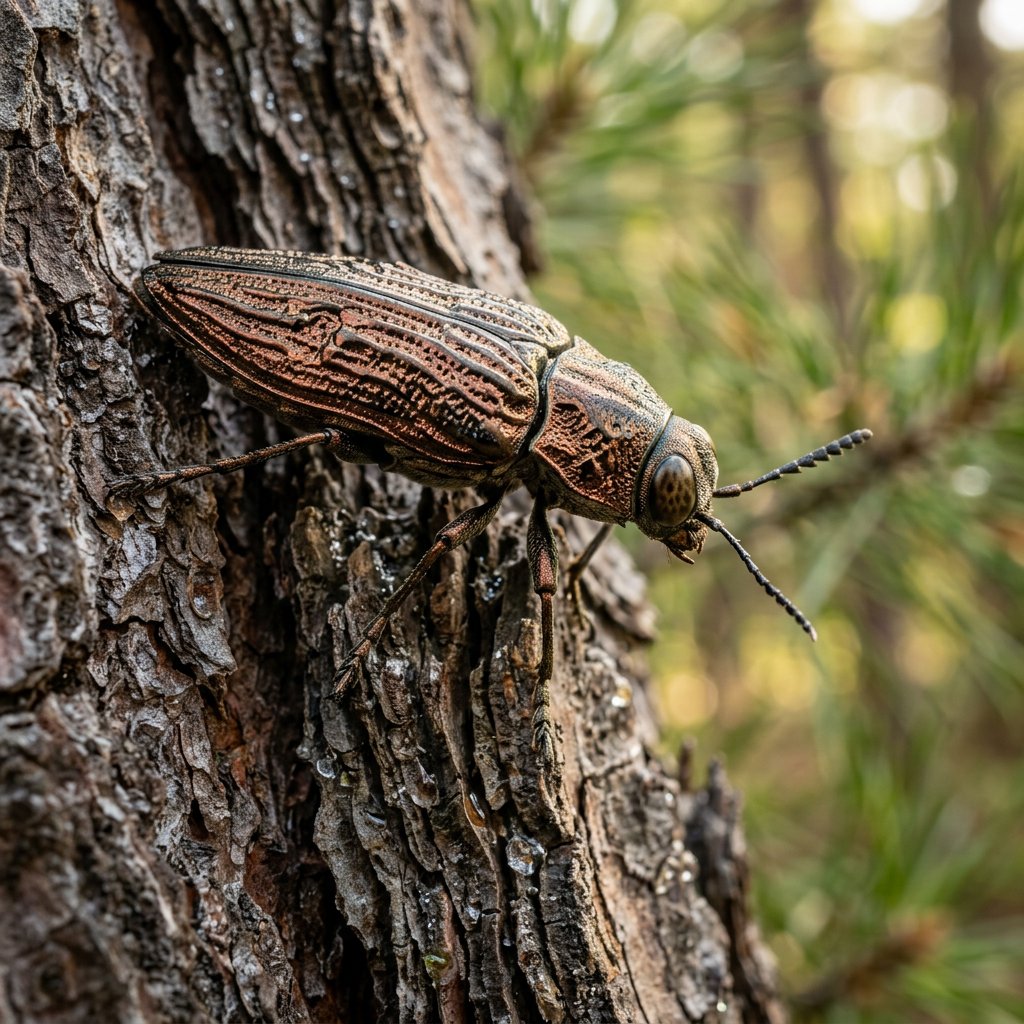
Often called the Sculptured Pine Borer, this metallic marvel looks like a piece of tarnished brass come to life. As one of the largest "Jewel Beetles" in North America, it spends its days basking on sun-drenched logs in evergreen forests. Despite its rugged, armored appearance, it is a peaceful forest dweller that plays a vital role in the natural decomposition of aging pine trees.
🔍 How to Identify
- 🪲 Sculptured Texture: The wing covers (elytra) are deeply pitted and grooved, giving them the appearance of hammered metal or weathered wood.
- ✨ Metallic Sheen: While primarily dark grey or brownish-black, it has a distinct copper or brassy metallic luster that shimmers when caught in the sunlight.
- 📐 Bullet Shape: It possesses a sturdy, streamlined, and elongated body (usually about an inch long) with a broad, blunt head typical of the Buprestid family.
🌲 Habitat & Ecology
- 🌲 The Pine Specialist: As the name suggests, these beetles are almost exclusively found in or around pine forests. Adults feed on tender pine needles, while the larvae develop inside dead or dying pine logs.
- ☀️ Sun Worshiper: You are most likely to spot them on hot summer days. They are "thermophilic," meaning they love the heat, and will sit perfectly still on tree trunks to soak up the sun before taking flight.
⚠️ Safety & Toxicity
- 🛡️ Harmless Giant: Despite their intimidating "armored" look, these beetles are completely harmless to humans. They do not sting and are not known to bite unless extremely provoked.
- 🐾 Pet Safety: They are non-toxic to pets. If a curious dog or cat finds one, the beetle's hard shell usually acts as enough of a deterrent to prevent it from being eaten.
✨ Fun Fact
The larvae of this beetle are known as "Flatheaded Borers" because of their strangely widened, flattened segments just behind the head, which they use to scrape out winding, "S-shaped" tunnels under the bark of pine trees.
More Details








