Info
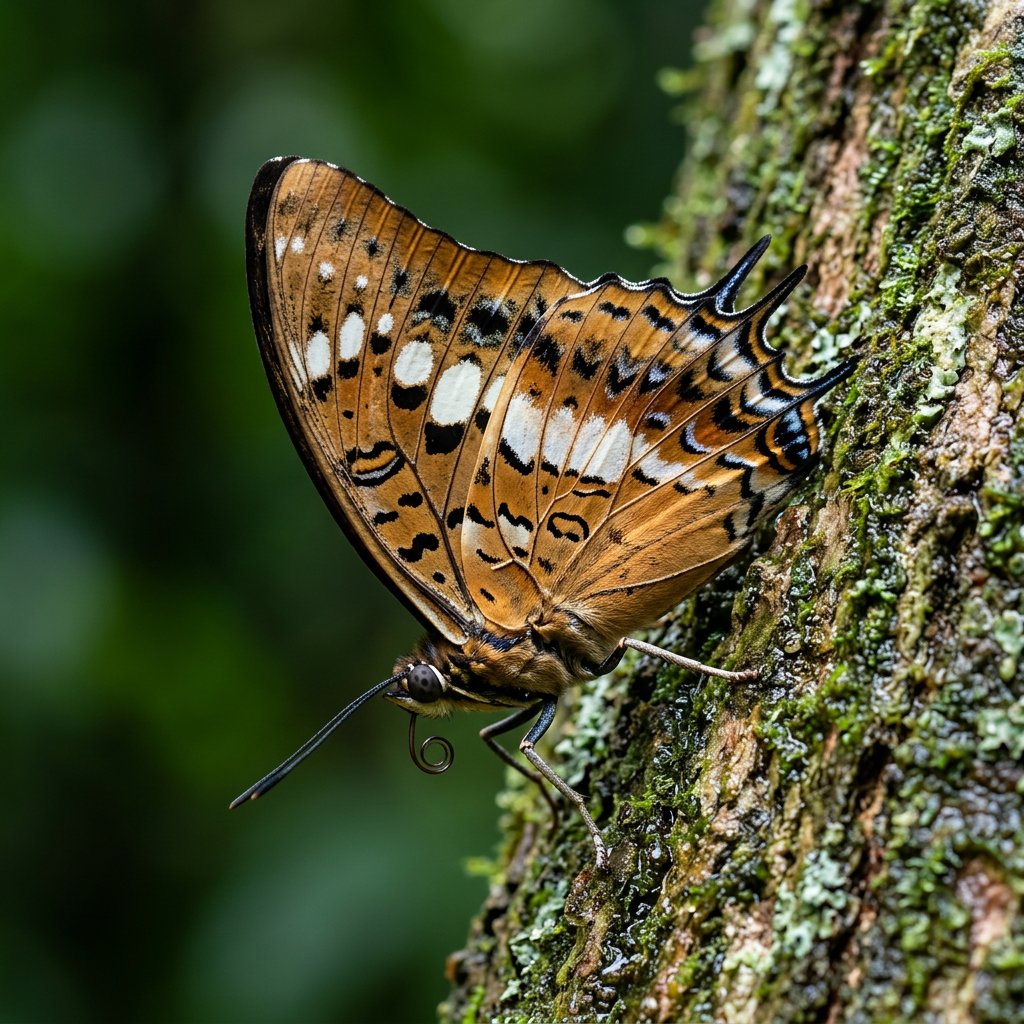
Known as the Common Tawny Rajah, this butterfly is a true powerhouse of the forest canopy. Unlike its more delicate relatives, the Tawny Rajah is built for speed and strength, often appearing more like a small bird than an insect as it darts through the trees. It is a prized sight for hikers in South and Southeast Asia, where its vibrant, burnt-orange wings flash like gold in the sunlight.
🔍 How to Identify
- 🦋 Wing Coloration: The upper side of the wings is a deep, rich tawny orange, framed by thick, dark chocolate-brown borders.
- 🗡️ The Double Tails: Look closely at the hindwings; this species features two distinct, sharp "tails" on each wing, giving it a regal, jagged silhouette.
- 🍂 Dead-Leaf Camouflage: When its wings are closed, the underside reveals a complex pattern of earthy browns and greys, allowing it to vanish instantly against tree bark or dried leaves.
🌲 Habitat & Ecology
- 🍎 A Unique Diet: You won't usually find this "Rajah" on flowers. It prefers a more pungent menu, feeding primarily on fermenting fruit, oozing tree sap, and occasionally nutrient-rich animal waste to gain essential minerals.
- 👑 Territorial Kings: Males are notoriously feisty. They pick a favorite "perch" high in the trees and will aggressively chase away other butterflies (and even large insects) that wander into their air space.
- 🐉 Dragon Larvae: The Tawny Rajah begins life as one of the most incredible caterpillars in the world, sporting a hard head shield with four curved horns that make it look like a tiny, green Chinese dragon.
⚠️ Safety & Toxicity
- ✅ Harmless: The Tawny Rajah is a "gentle giant" toward humans. It possesses no stinger and is not poisonous to the touch.
- 🛡️ Fragile Wings: While it is a powerful flyer, avoid trying to catch or handle it. Its wing scales are easily damaged, which can hinder its ability to fly and escape real predators like birds or lizards.
✨ Fun Fact
The Tawny Rajah belongs to a group of butterflies known as "Emperors" and "Rajahs," named so by early entomologists because of their majestic flight, large size, and the "crowns" (horns) found on their caterpillars!
More Details








