Info
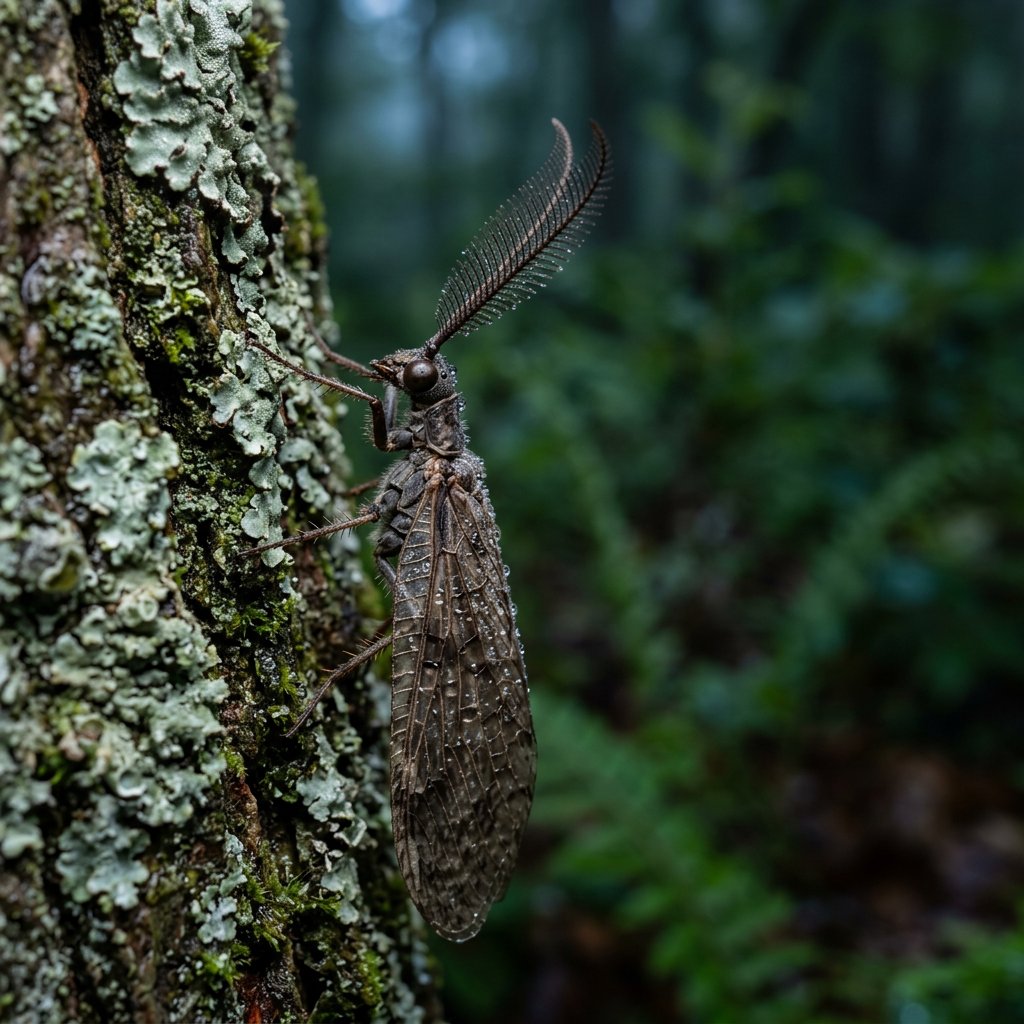
Often mistaken for their much scarier-looking cousin, the Dobsonfly, the Spring Fishfly is a gentle giant of the twilight hours. With its prehistoric wing patterns and "comb-like" antennae, it looks like a tiny dragon from a lost era. While they might startle you by thumping against your porch light on a summer night, they are actually harmless neighbors and excellent indicators of a healthy local ecosystem.
🔍 How to Identify
- 🪶 Feathered Antennae: The most striking feature is the antennae, which are "pectinate" or comb-like, resembling tiny rakes (especially in males).
- 🏁 Peppered Wings: Their large, translucent wings are dusty gray or tan, covered in a delicate pattern of dark brown spots or "pepper" marks.
- 📐 Tent-Like Posture: When at rest, they fold their wings over their backs in a steep, roof-like shape, hiding their segmented body.
🌲 Habitat & Ecology
- 💧 Water Quality Experts: You will almost always find them near ponds, swamps, or slow-moving streams. Their larvae are aquatic, and their presence usually suggests the water is relatively clean and unpolluted.
- 🌙 Nocturnal Navigators: These insects are strictly nocturnal. They spend their days hiding in dense foliage and emerge at night, where they are famously—and clumsily—attracted to artificial lights.
- ⏳ A Brief Adulthood: Unlike their long-lived larvae (which spend years underwater), the winged adults live for only a few days, focusing entirely on mating rather than hunting for food.
⚠️ Safety & Toxicity
- 🛡️ Status: Completely Harmless.
- 🚫 Details: Despite their large size and somewhat "toothy" appearance, Spring Fishflies do not have stingers and their mandibles are far too weak to bite humans or pets. They are "gentle giants" that pose no threat to your garden or your skin.
✨ Fun Fact
The scientific name rastricornis literally translates to "rake-horned." This refers to the male's magnificent, comb-shaped antennae, which act like ultra-sensitive chemical sensors to "sniff out" the pheromones of a female from great distances in the dark!
More Details








