Info
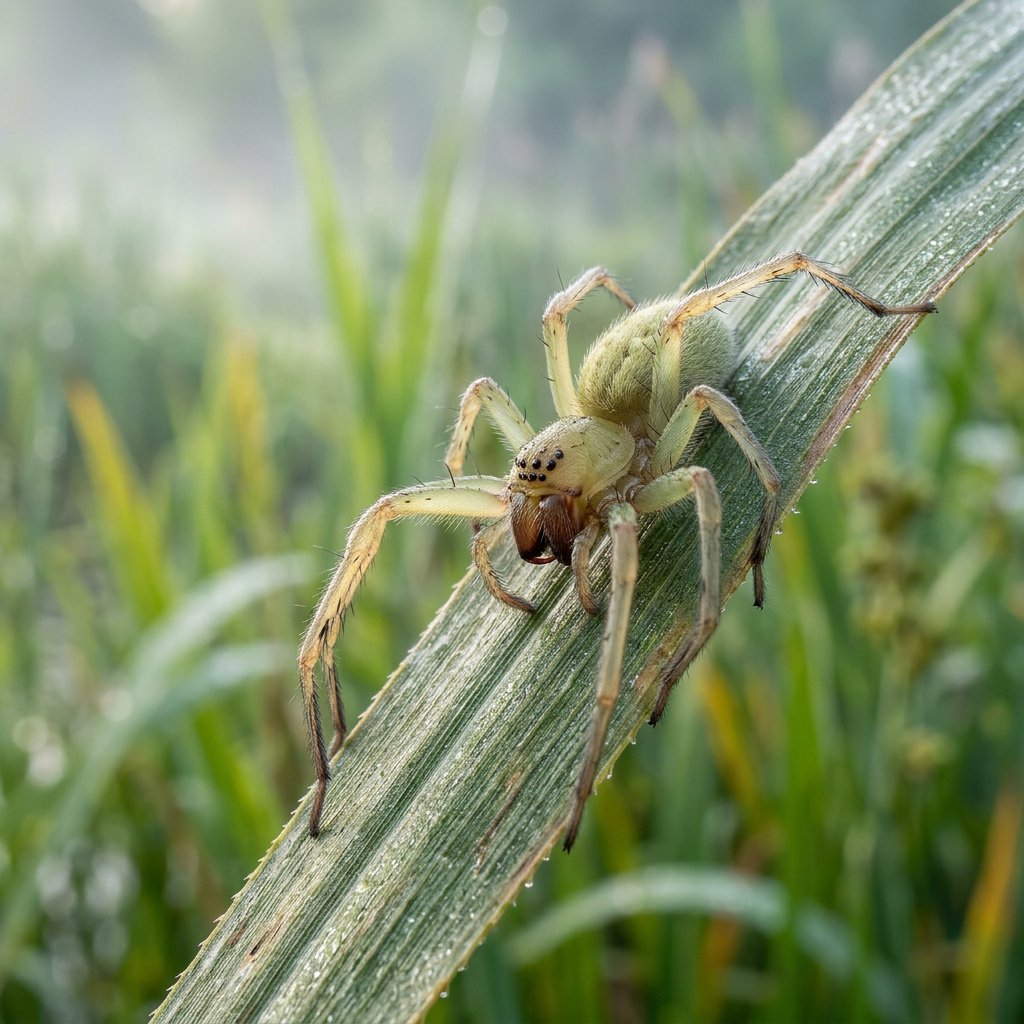
Often called the European Yellow Sac Spider, this leggy wanderer is famous for its powerful bite and striking, translucent appearance. While it might look intimidating with its oversized, dark-tipped jaws, it is a master pest-controller that helps keep garden bug populations in check. It is a "nomadic" hunter, preferring to prowl the night rather than waiting in a traditional sticky web.
🔍 How to Identify
- 🎨 Pale Palette: A translucent body ranging from creamy yellow to a soft lime green, often with a darker stripe running down the abdomen.
- 👄 The Jaws: Prominent, dark reddish-brown mouthparts (chelicerae) that are significantly larger than those of most common garden spiders.
- 🏗️ Silk Sacs: They do not spin orb webs. Look for dense, white silk "sleeping bags" or retreats tucked into tall grass or inside curled leaves.
🌲 Habitat & Ecology
- 🦗 The Night Stalker: This spider is an active predator that roams through vegetation at night to ambush flies, moths, and other small insects, acting as a natural form of pest control.
- 🌾 Meadow Dweller: It thrives in warm, un-mowed grasslands and meadows. In late summer, you’ll often find their walnut-sized silk nests high up on plant stems where they protect their eggs.
- 🏠 Autumn Visitors: As the weather cools, they may occasionally wander into homes seeking warmth, though they much prefer the humidity of the outdoors.
⚠️ Safety & Toxicity
- 🦂 Venomous: This is one of the few spiders in Europe and Western Asia whose bite is clinically significant to humans.
- 🩹 The Sting: A bite is often compared to a wasp sting—expect intense local pain, redness, and swelling. While not lethal, some people may experience mild nausea or skin lesions. Keep curious pets and children away from their silk sacs in the garden.
✨ Fun Fact
The female Cheiracanthium punctorium is a devoted, if aggressive, mother. She will seal herself inside the silk sac with her eggs and refuse to eat, spending her final days fiercely defending her offspring from any vibration or intruder that touches the nest.
More Details








