Info
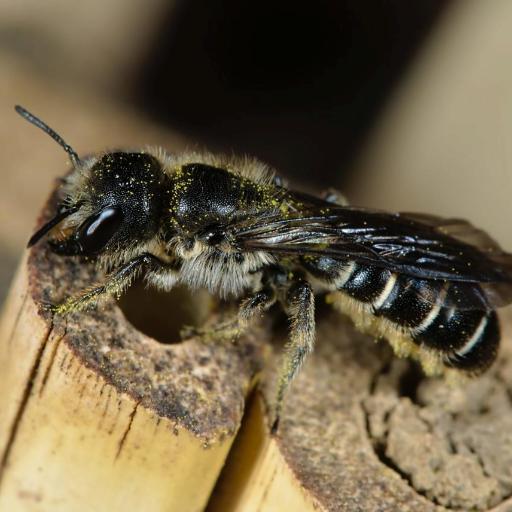
Often called the Large Scissors-bee, this slender, dark insect is a frequent guest in sun-drenched gardens where buttercups bloom. Its name comes from the scissor-like appendages on the male's abdomen, used to grasp the female during their aerial courtship. While it might look like a tiny black toothpick with wings, it is one of the most dedicated specialist pollinators in the insect world.
🔍 How to Identify
- 🪶 Body Shape: Exceptionally long, thin, and cylindrical. It looks almost like a tiny black twig or a miniature cigar compared to the rounder shape of a honeybee.
- 🖤 Coloration: A sleek, matte black throughout, lacking the bright yellow or orange stripes typically associated with bees. It has very sparse, pale hairs.
- ✂️ The "Scissors": Males possess two distinct, pointed projections at the end of their abdomen. Females can be identified by the "scopa" (dense pollen-collecting hairs) located on the underside of their belly rather than their legs.
🌲 Habitat & Ecology
- 🌼 Buttercup Specialist: This bee is "oligolectic," meaning it is a picky eater. It exclusively collects pollen from Buttercups (Ranunculus). You will almost always find them hovering around these golden wildflowers.
- 🪵 Nesting Habits: They are solitary dwellers that do not build hives. Instead, they "recycle" old beetle holes in dead wood or settle into the hollow stems of reeds and brambles. They are frequent residents of "bee hotels" in backyard gardens.
⚠️ Safety & Toxicity
- 🐝 Status: Completely harmless "garden friend."
- 🛡️ Non-Aggressive: Because they have no queen or honey stores to defend, Scissors-bees are incredibly docile. They have no interest in humans or pets. While females do have a tiny stinger, they will only use it if they are being crushed or handled roughly; the sensation is much weaker than a typical wasp sting.
✨ Fun Fact
When evening falls or the weather turns cold, males don’t return to a nest. Instead, they curl up and sleep inside the golden cups of buttercup flowers. They often use their "scissor" tails to lock themselves onto the petals or stamens so they don't fall out if the wind blows!
More Details








