Info
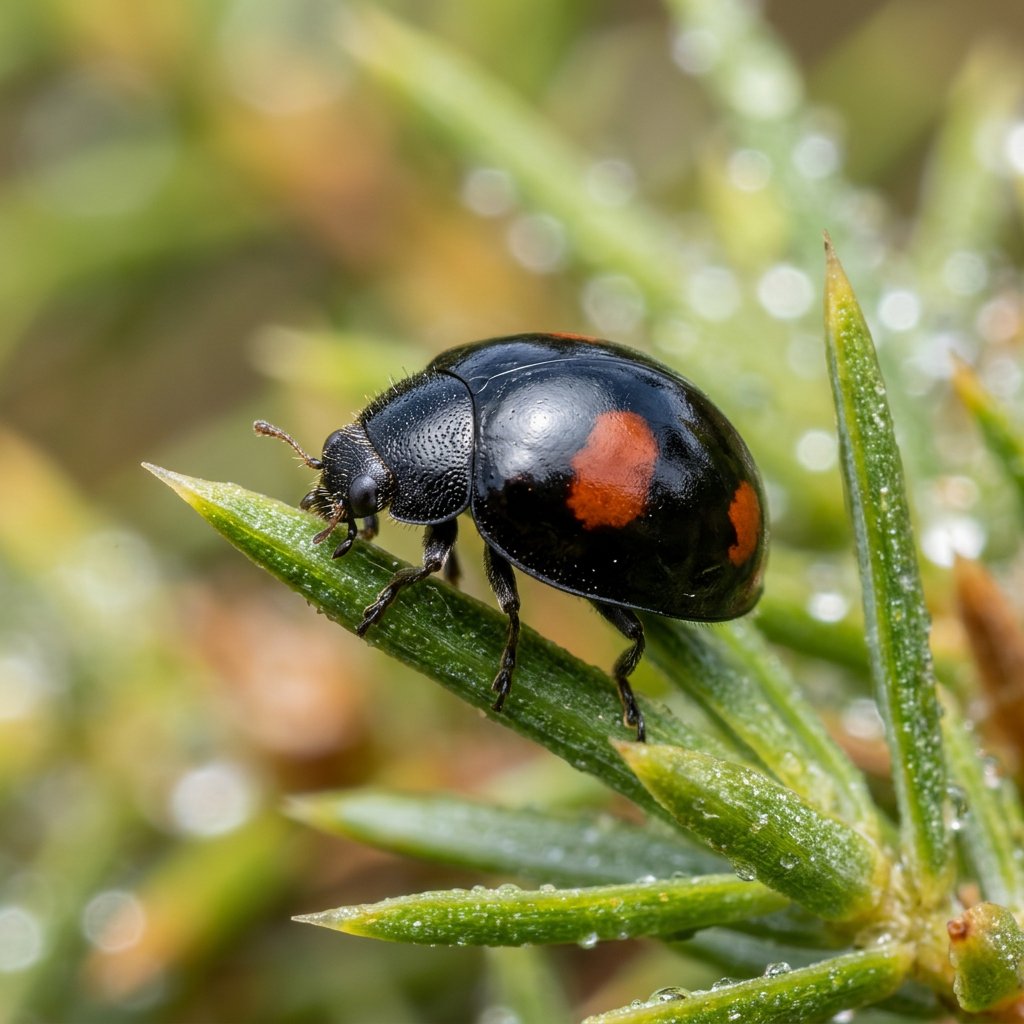
Meet the Heather Ladybird, a tiny but fierce defender of your garden. Known scientifically as Chilocorus bipustulatus, this beetle is a specialist hunter that looks like a polished piece of black obsidian dropped in the grass. While it may be small, its presence is a sign of a healthy, balanced ecosystem where natural pest control is at work.
🔍 How to Identify
- 🐞 The Armor: A highly convex, dome-shaped body that is a deep, glossy black. It looks almost like a tiny, shiny helmet.
- 🎨 The Markings: Look for two or three small, reddish-orange spots arranged in a horizontal line across the middle of each wing cover. These spots can sometimes look like tiny, glowing embers against the black background.
- 📏 Size: It is notably smaller than the common red ladybug, usually measuring only 3 to 5 millimeters in length.
🌲 Habitat & Ecology
- 🍽️ The Scale Hunter: Unlike generalist ladybugs, this species is a specialist. It primarily hunts scale insects and mealybugs, making it an elite "biological control agent" for orchards and ornamental gardens.
- 🌿 Tree Lovers: You will most likely spot them on the bark or leaves of heather, willow, ash, and citrus trees. They prefer woody plants where their sluggish prey tends to congregate.
⚠️ Safety & Toxicity
- ✅ Friend to Humans: These beetles are completely harmless. They do not sting, bite humans, or carry diseases.
- 🛡️ Reflex Bleeding: If you pick one up and notice a yellow stain on your hand, don't panic! This is "reflex blood," a bitter-smelling fluid they release from their joints to tell predators they taste terrible. It is non-toxic but can be mildly irritating if it gets in your eyes.
- 🐾 Pet Safe: While not poisonous, the bitter taste usually ensures that curious cats or dogs won't try to eat them twice.
✨ Fun Fact
The specific name bipustulatus comes from the Latin word for "blister" or "pimple," referring to the raised, colorful spots on its back that look like tiny droplets of orange paint.
More Details








