Info
Often overlooked by the casual observer, flies of the genus Chirosia are the secret architects of the fern world. Known commonly as "Fern Flies," these small, unassuming insects have a highly specialized relationship with one of Earth’s oldest plant groups. If you’ve ever noticed the tips of a fern curling into a strange, tight "fist," you’ve likely found the nursery of a Chirosia larva.
🔍 How to Identify
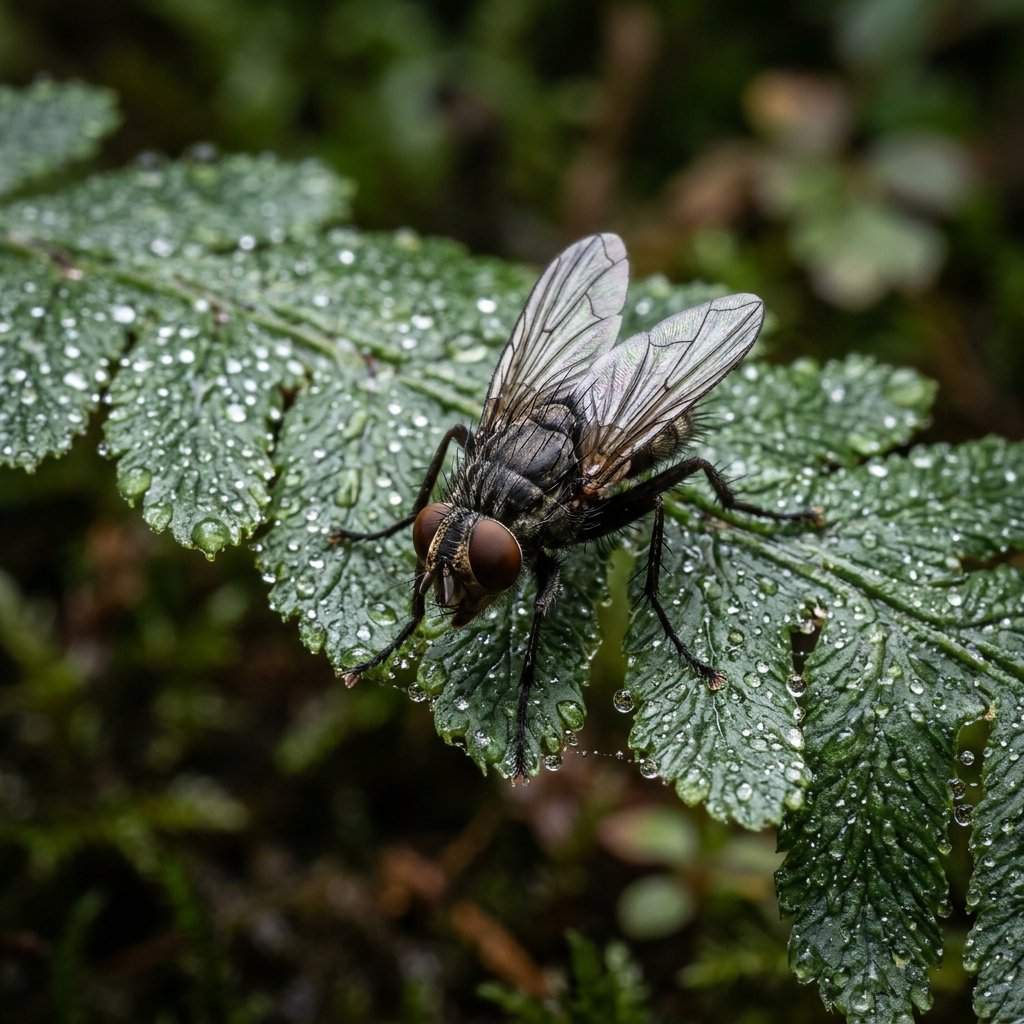
- 🪽 Slender Profile: These are small, delicate flies (usually 3–6mm) with a grayish or dark soot-colored body, lacking the bright metallic shimmer of common houseflies.
- 👀 Prominent Eyes: They feature large, reddish-brown compound eyes that take up a significant portion of their head, typical of the Anthomyiidae family.
- 🌿 The "Signature" Curl: The most reliable way to identify them is by their trace; they cause the leaflets (pinnae) of ferns to roll into protective, cigar-shaped galls or display translucent "mines" where the larvae have been feeding.
🌲 Habitat & Ecology
- 🍃 Fern Specialists: You will almost exclusively find these flies in damp, shaded woodlands or gardens where ferns like Bracken, Male Fern, or Lady Fern flourish.
- 🏗️ Niche Engineering: The female fly lays her eggs on the unfurling fronds. As the larvae hatch and feed, they stimulate the plant to grow abnormally, creating a "leaf roll" that protects the insect from predators and harsh weather.
- 🔄 Ancient Bond: They are one of the few insect groups that have successfully bypassed the complex chemical defenses of ferns, which many other herbivores find toxic or unpalatable.
⚠️ Safety & Toxicity
- ✅ Harmless to Humans: Chirosia flies are "friendly" in the sense that they do not bite, sting, or transmit diseases. They are strictly interested in plants, not people or pets.
- 🥀 Garden Impact: While they are a nuisance to perfectionist gardeners because they can make fern tips look "burnt" or distorted, they rarely cause enough damage to kill a healthy plant.
✨ Fun Fact
[The "Cigar" Maker] Some species, like Chirosia betuleti, are so skilled at manipulating plant growth that the galls they create are almost perfectly symmetrical, earning them the nickname "the cigar-maker of the ferns."
More Details








