Info
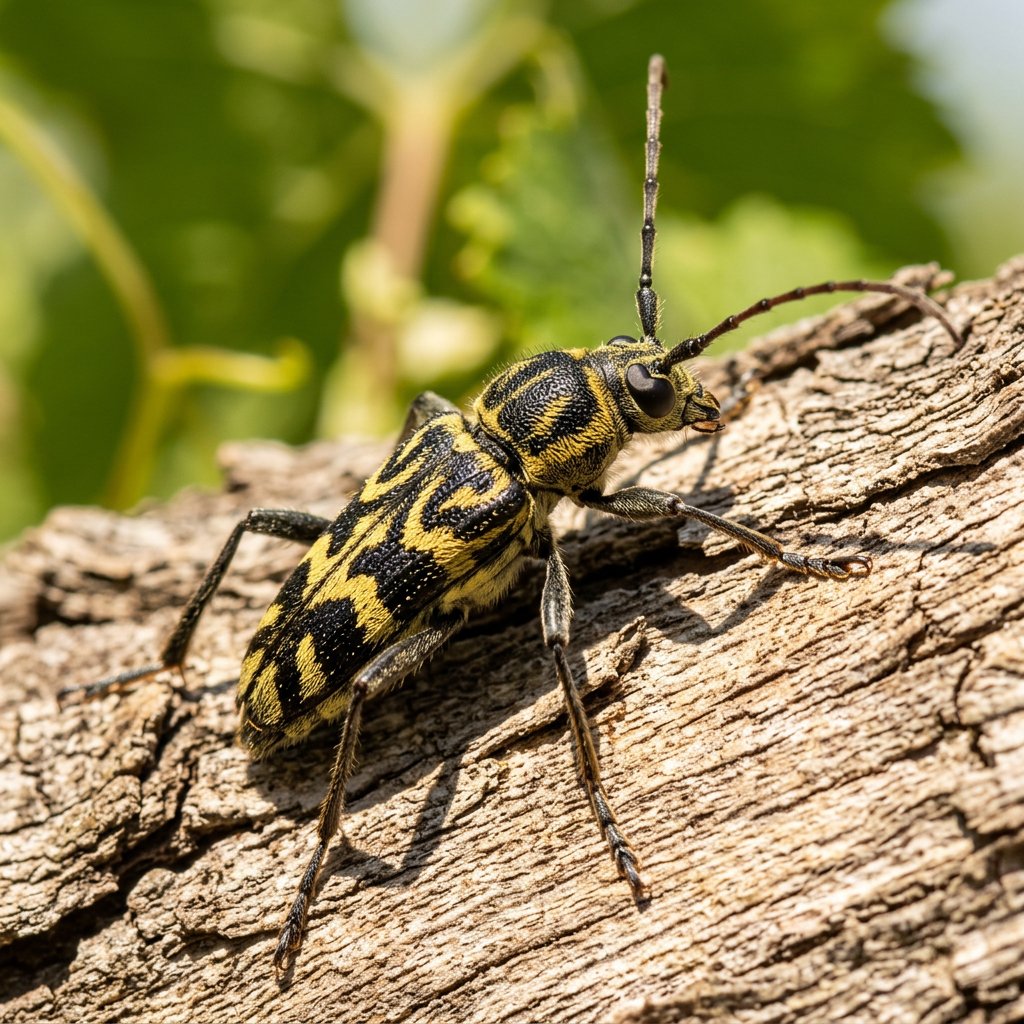
Meet the ultimate master of disguise! Often mistaken for a slender wasp, the Chlorophorus varius is actually a harmless beetle that has perfected the art of "Batesian mimicry" to ward off predators. Found dancing across sun-drenched flowers in mid-to-late summer, this "Variable Longhorn Beetle" is a charming and helpful visitor to gardens across Europe and Asia.
🔍 How to Identify
- 🎨 The Pattern: Features striking alternating bands of sulfur-yellow (or lime-green) and black. The pattern is "variable" (hence the name varius), but typically includes three dark bands across the wing covers.
- 📏 Body Shape: A long, cylindrical, and slender silhouette typical of the longhorn family, usually growing to about 8–14mm in length.
- 📡 Antennae: While its antennae are shorter than many other longhorn beetles, they are still prominent, segmented, and lack the "elbow" shape found in the wasps it mimics.
🌲 Habitat & Ecology
- 🦋 The Pollinator: Adult beetles are "floricolous," meaning they live on flowers. They are particularly fond of white, flat-topped blooms like Wild Carrot, Elderberry, and Yarrow, where they feast on nectar and pollen.
- 🪵 Life in the Wood: While the adults love the sun, the larvae are hidden away. They develop inside the wood of deciduous trees and shrubs—most notably grapevines and fruit trees—where they spend two to three years maturing before emerging.
- ☀️ Sun Seeker: This is a thermophilic insect, meaning it loves the heat. You are most likely to spot them on the hottest days of July and August in open, flowery meadows or sunny garden borders.
⚠️ Safety & Toxicity
- 🛡️ All Bark, No Bite: Despite its "warning colors," this beetle is entirely non-venomous and has no stinger. It is a "friend" to the gardener and poses no threat to humans or curious pets.
- 👄 The Pinch: Like all beetles, they possess small mandibles for eating. If handled very roughly, they might deliver a tiny, harmless pinch, but they much prefer to use their wings to escape.
✨ Fun Fact
- 🎭 The Great Pretender: The Chlorophorus varius doesn't just look like a wasp; it acts like one! When it feels threatened, it will walk with a jerky, agitated motion and vibrate its wings to mimic the frantic energy of a stinging yellowjacket, successfully tricking hungry birds into looking elsewhere for a snack.
More Details








