Info
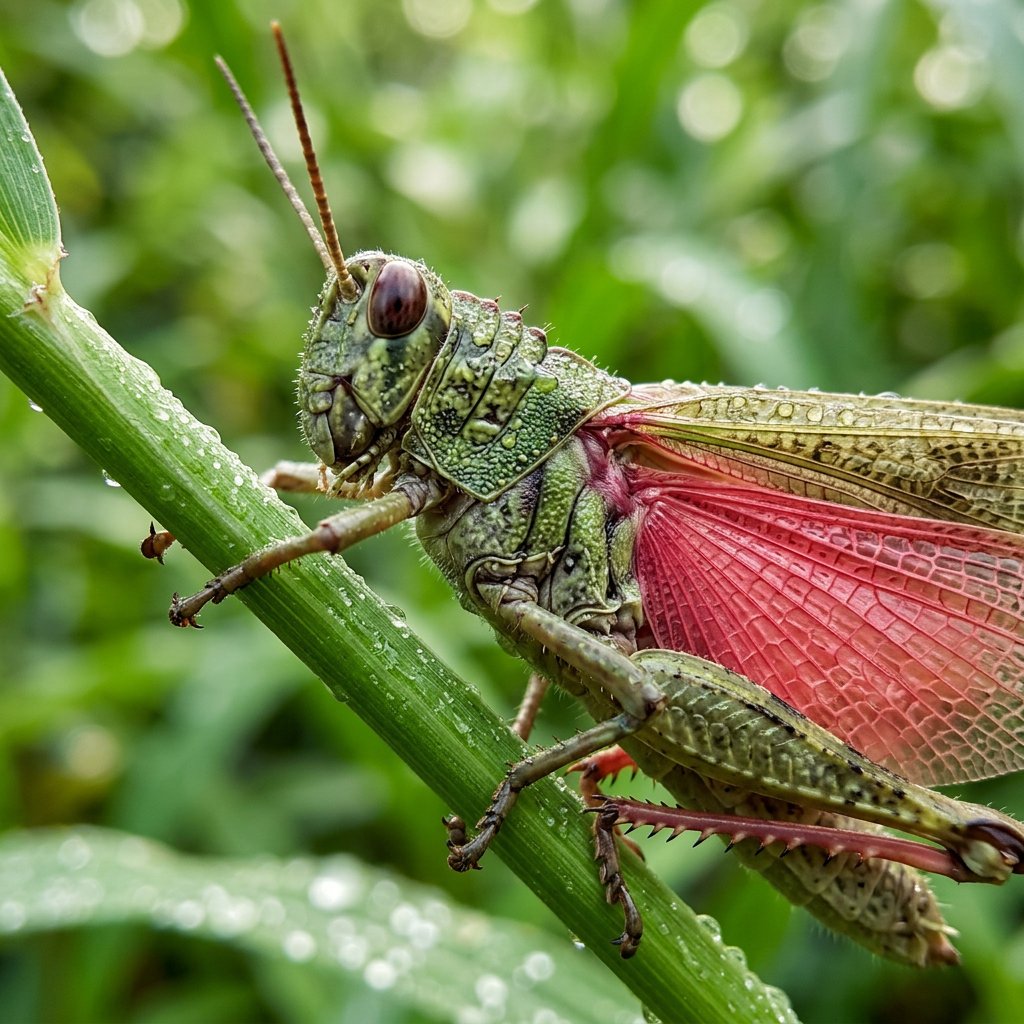
The Chondracris rosea, commonly known as the Citrus Locust or the Rose-winged Grasshopper, is a true giant of the insect world. Draped in a vibrant, leafy green suit, this grasshopper is often mistaken for a stray leaf until it takes flight, revealing a surprising flash of pink beneath its wings. In many parts of Asia, it is a familiar sight in orchards, where its impressive size and rhythmic clicking make it a hard-to-miss garden resident.
🔍 How to Identify
- 🟢 The "Leaf" Look: They possess a robust, elongated body covered in a matte, lime-green exoskeleton that provides perfect camouflage among foliage.
- 🌸 Hidden Blush: Their namesake "rosea" comes from the delicate rose-pink or purplish tint at the base of their large hind wings, visible only when they are spread for flight.
- 👁️ Striped Eyes: Look closely at their large, oval eyes; they often feature subtle vertical stripes and a yellowish-orange hue that gives them a focused, intense expression.
🌲 Habitat & Ecology
- 🍋 The Orchard Tenant: As their name "Citrus Locust" suggests, they have a particular fondness for citrus trees, though they are happy to munch on tea leaves, bananas, and various broad-leafed garden plants.
- 🚀 High-Power Jumpers: These insects are built for distance. Their powerful, spiny hind legs allow them to launch into the air with incredible force, transitioning into a strong, steady flight to escape predators or find new feeding grounds.
⚠️ Safety & Toxicity
- ✅ Harmless but Heavy-Handed: The Citrus Locust is non-venomous and does not possess a stinger. It is generally safe to observe from a distance.
- 🦵 Prickly Defense: If you try to pick one up, be careful! Their back legs are lined with sharp spines that can scratch the skin, and their strong mandibles may deliver a non-toxic but surprising "pinch" if they feel threatened.
✨ Fun Fact
Despite being called a "locust," Chondracris rosea is a bit of a loner. Unlike the famous migratory locusts that form devastating "plagues" or swarms, these green giants prefer a solitary life, quietly patrolling their favorite trees one leaf at a time.
More Details








