Info
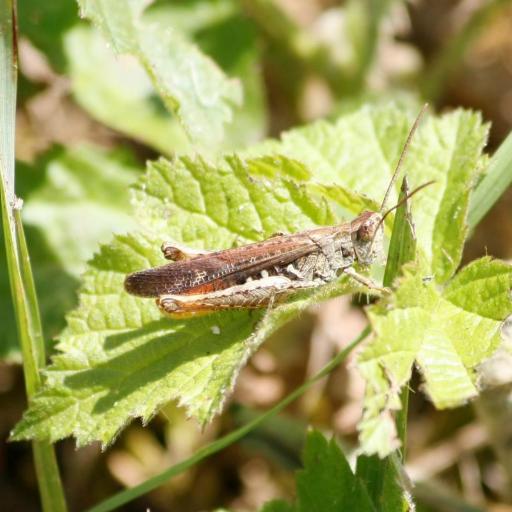
Often called the Field Grasshopper, this little jumper is the quintessential sound of a warm summer afternoon. Found across Europe and North Africa, it is a master of disguise, capable of shifting its colors through various shades of brown, grey, and even purple to blend into the parched earth. While many grasshoppers prefer lush greenery, this species is a sun-seeker that thrives in dry, open spaces where the heat radiates from the soil.
🔍 How to Identify
- 🎨 Color Variation: Typically mottled brown or grey, but can occasionally appear with hints of green or reddish-pink depending on its environment.
- 📐 The Pronotum: Look at the "saddle" behind the head; it features distinct side ridges that curve sharply inward, creating a characteristic "hour-glass" shape.
- 🧶 Hairy Underside: Unlike many of its cousins, the Field Grasshopper has a notably hairy underside, which is one of its most reliable identifying markers.
🌲 Habitat & Ecology
- ☀️ Sun Worshipper: You’ll most likely spot them in dry, sunny spots with short grass, such as heathlands, abandoned railway tracks, or even gaps between paving stones in a garden.
- 🌾 Dietary Habits: They are strict vegetarians, primarily feeding on a variety of common grasses. They aren't considered significant garden pests, as they prefer wild, unmanaged turf.
- 🎵 Summer Soundtrack: The male produces a short, sharp "song"—a series of brief chirps lasting about half a second—by rubbing its hind legs against its wings.
⚠️ Safety & Toxicity
- ✅ Harmless: The Field Grasshopper is completely safe for humans and pets. It does not bite, sting, or carry any diseases.
- 🏃 Defense Mechanism: Its only defense is its powerful hind legs, which it uses to catapult away from danger, often followed by a short, fluttering flight to a new hiding spot.
✨ Fun Fact
The Field Grasshopper is a "thermophilous" insect, meaning it loves heat so much that it won't even start singing until the sun has warmed its body to a specific temperature. If a cloud blocks the sun, the "concert" often stops abruptly!
More Details








