Info
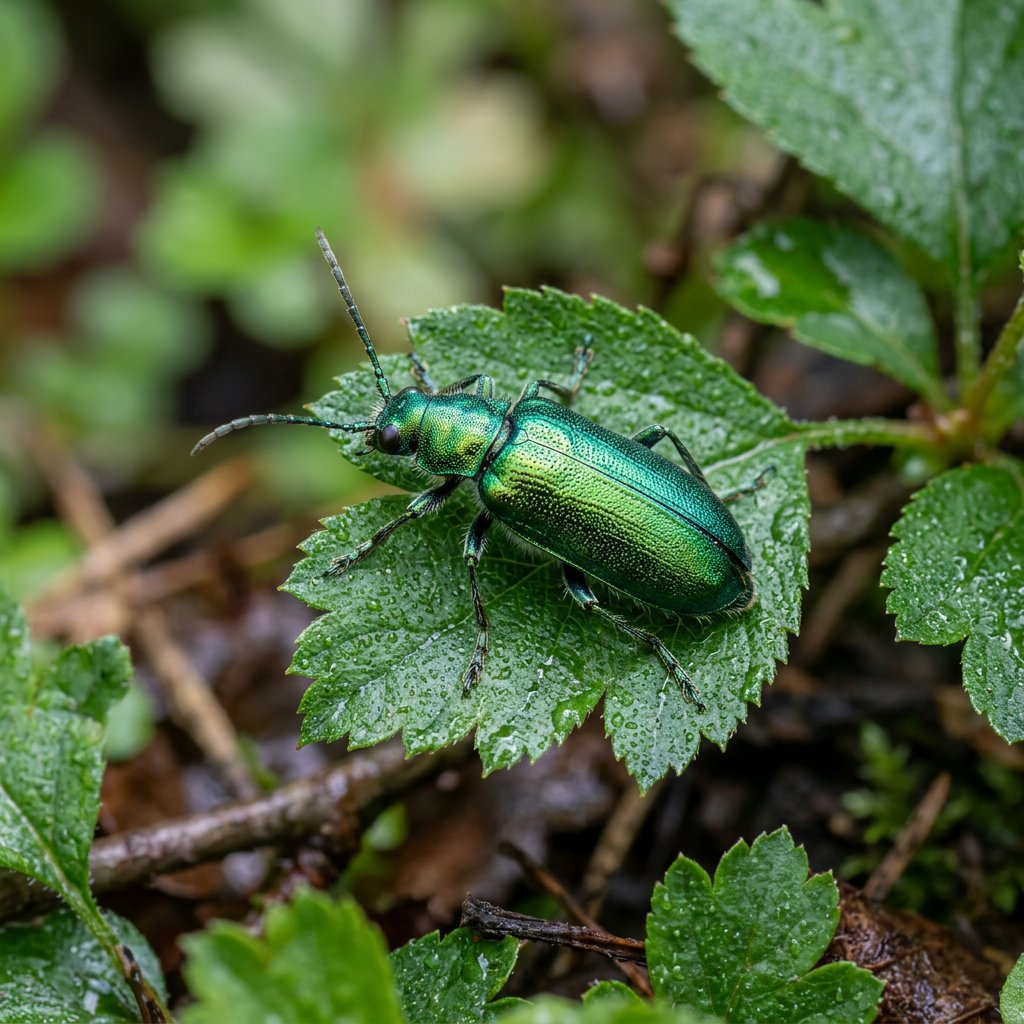
Often referred to as the Emerald False Blister Beetle, Chrysanthia viridissima is a shimmering, slender gem of the summer meadows. While its metallic green body makes it look like a piece of living jewelry resting on a flower, this beetle is more than just a pretty face—it is a dedicated pollinator that favors bright, sun-drenched clearings. Despite its delicate appearance, it carries a "hidden chemical defense" that demands a bit of respect from curious hands.
🔍 How to Identify
- 💎 Metallic Sheen: The most striking feature is its brilliant, uniform metallic green or golden-green coloration that covers the entire body.
- 📏 Slender Profile: It has a notably elongated, narrow body and long, thin antennae, giving it a much more graceful appearance than typical "chunky" beetles.
- 🪶 Soft Elytra: Unlike the hard, armored shells of many beetles, its wing covers (elytra) are relatively soft and slightly textured with fine ridges.
🌲 Habitat & Ecology
- 🌼 The Flower Specialist: You will almost always find adults perched on open-faced flowers like daisies, hawkweeds, or cow parsley. They feed primarily on pollen and nectar, playing a vital role in local pollination.
- 🪵 Woodland Beginnings: While the adults love the sun, the larvae are creatures of the shade. They typically develop in decaying coniferous wood, helping to break down fallen logs and return nutrients to the soil.
- ☀️ Sun Seeker: These beetles are diurnal and most active during the hottest parts of the day in mid-to-late summer, darting between blooms in temperate forests and alpine meadows.
⚠️ Safety & Toxicity
- 🧪 Chemical Defense: As a member of the "False Blister Beetle" family (Oedemeridae), it may contain cantharidin, a toxic chemical that can cause skin irritation or blistering if the beetle is crushed against the skin.
- 🚫 Handle with Care: While they are not aggressive and do not bite or sting, it is best to observe them without touching. If one lands on you, gently blow it off rather than brushing it away to avoid accidental crushing.
- 🐾 Pet Safety: Keep curious pets away; if ingested, the chemical defense can cause mouth irritation or digestive upset in cats and dogs.
✨ Fun Fact
Unlike its famous cousin, the Swollen-thighed Beetle (Oedemera nobilis), the Chrysanthia viridissima does not have "buff" or thickened hind legs. It relies entirely on its brilliant metallic "warning colors" to tell predators that it’s not a very tasty snack!
More Details








