Info
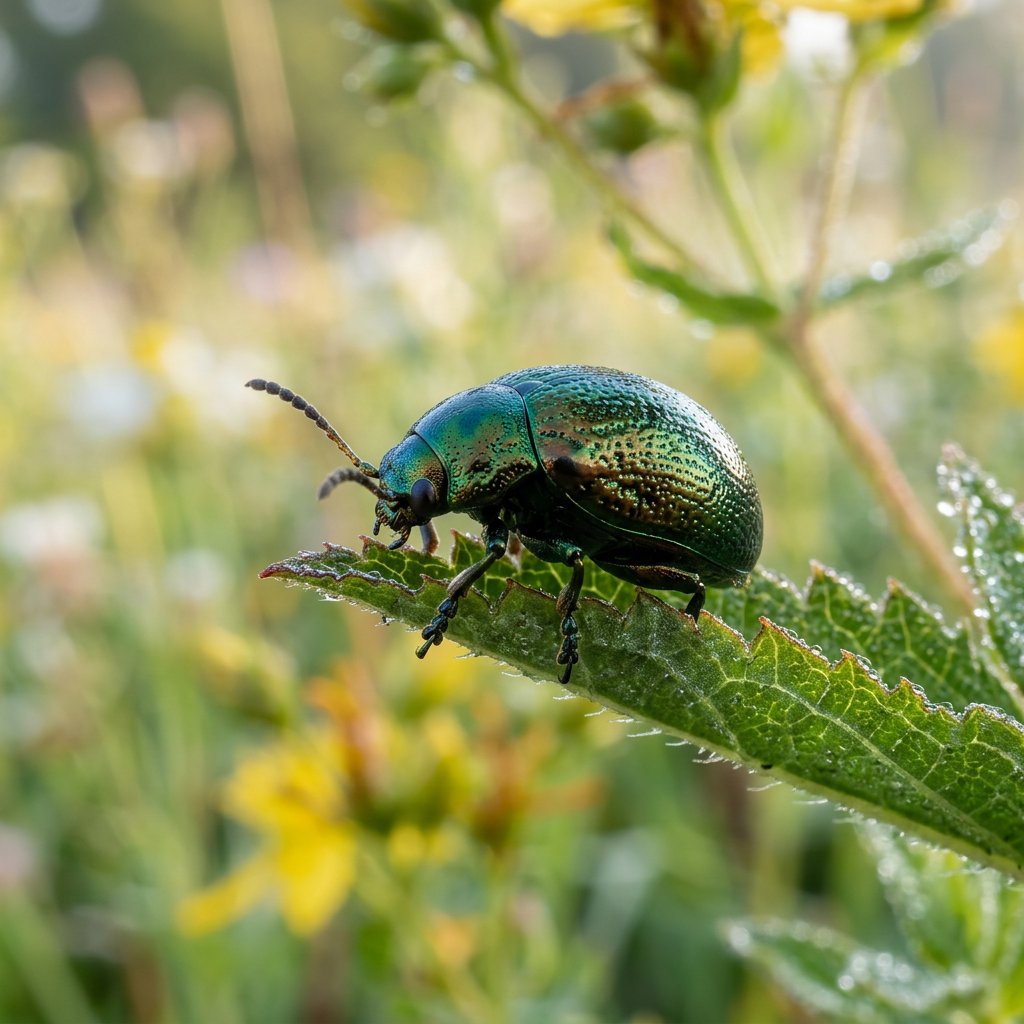
Meet the St. John’s Wort Beetle, a tiny, metallic knight in shining armor that has earned its reputation as a biological hero. Originally from Europe, this beetle was intentionally introduced to North America and Australia to combat invasive weeds. Often called the "Klamath Weed Beetle," it is the ultimate specialist with a very specific appetite.
🔍 How to Identify
- 🪲 Body Shape: A compact, oval-shaped beetle with a sturdy, domed back typical of the leaf beetle family.
- ✨ Metallic Sheen: They display a brilliant, iridescent luster that shifts between deep bronze, metallic green, and occasionally subtle purples or blues.
- 🕳️ Pitted Wing Covers: If you look closely, their elytra (wing covers) are marked with rows of tiny, distinct punctures or "pits" that look like they were made with a needle.
🌲 Habitat & Ecology
- 🍽️ The Ultimate Specialist: This beetle is a "friend" to those trying to manage invasive plants but a "foe" to St. John’s Wort (Hypericum perforatum). It feeds exclusively on this plant, often stripping the leaves until only the stems remain.
- ☀️ Sun Lovers: You’ll typically find them in open, sunny grasslands or pastures where their host plant thrives. They are most active during the late spring and early summer when the foliage is lush.
- 🚜 Biological Control: Because they are so effective at eating their host plant, they are often used by farmers and land managers as a natural alternative to chemical herbicides.
⚠️ Safety & Toxicity
- ✅ Harmless to Humans: These beetles are completely safe to handle. They do not bite, sting, or carry diseases that affect people.
- 🛡️ Pet Safety: They are non-toxic to pets. While a curious cat or dog might try to taste one, the beetle’s hard shell and metallic taste usually discourage any further snacking.
- 🌿 Garden Impact: They are only a threat to your garden if you are intentionally growing St. John’s Wort for medicinal or ornamental purposes.
✨ Fun Fact
The Chrysolina hyperici was part of one of the most successful biological control projects in history. In the 1940s, St. John’s Wort had taken over millions of acres of Californian rangeland; after these beetles were released, the weed population plummeted by 99%, saving the local cattle industry!
More Details








