Info
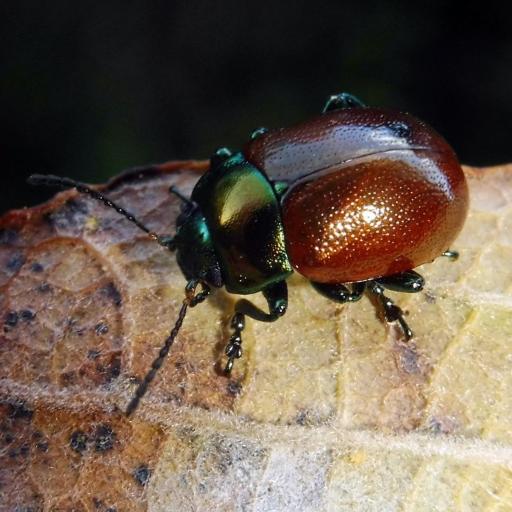
Often called the Polished Leaf Beetle, this little insect looks like a wandering gemstone dropped into the grass. With its brilliantly reflective, metallic body, it is a favorite for macro photographers and nature observers alike. While it might munch on your mint plants, its slow-moving nature and stunning colors make it a charming resident of any damp garden corner.
🔍 How to Identify
- 🐞 The Polished Shield: The wing covers (elytra) are exceptionally glossy and smooth, usually appearing in a rich coppery-red or bronze metallic hue.
- ✨ Bi-Colored Body: The head and the thorax (the middle section) typically contrast with the wings, often shimmering with a metallic green or deep golden-bronze tint.
- 🥚 Domed Silhouette: It has a distinctively rounded, convex shape—much like a ladybug, though slightly more elongated and lacking the typical spots.
🌲 Habitat & Ecology
- 🌿 The Mint Lover: These beetles are specialist feeders. You will almost always find them on plants in the mint family (Lamiaceae), particularly Water Mint or Gypsywort, where they spend their days slowly chewing small holes in the leaves.
- 💧 Damp Environments: They have a strong preference for moisture. Look for them in wet meadows, near the edges of ponds, or in shady, well-watered garden beds.
- 🛡️ The Drop Defense: If they feel the vibration of an approaching predator (or a curious human), they perform a move called "thanatosis"—they tuck in their legs and drop off the leaf into the tall grass, playing dead until the coast is clear.
⚠️ Safety & Toxicity
- ✅ Harmless Resident: This beetle is a "gentle neighbor." It possesses no stinger, does not bite humans, and does not carry any diseases.
- 🌱 Minor Garden Pest: While they are safe for people and pets, they can be a nuisance if you are growing mint for tea, as a large family of them can leave your herbs looking a bit "Swiss-cheesed."
✨ Fun Fact
The larvae of the Polished Leaf Beetle have a unique—and slightly gross—defense mechanism: they often carry a "fecal shield" or coat themselves in waste to look unappetizing to birds and predatory wasps!
More Details








