Info
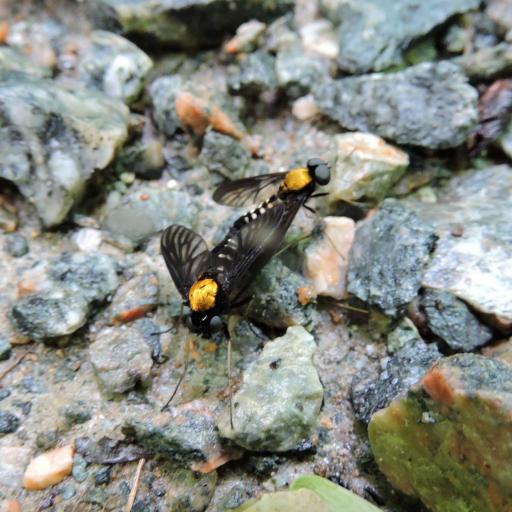
Known as the Golden-backed Snipe Fly, Chrysopilus thoracicus is one of the most striking insects you’ll encounter in the woodlands of eastern North America. With a thorax that glows like burnished gold against a velvet-black body, it looks more like a piece of living Victorian jewelry than a common fly. These elegant "snipers" are a favorite for macro photographers because they tend to sit perfectly still on sunlit leaves, acting as quiet guardians of the forest understory.
🔍 How to Identify
- ✨ The Golden "Cape": The most iconic feature is the thorax (the middle section), which is densely covered in brilliant, metallic golden-yellow hairs that shimmer intensely in the light.
- 🪽 Smoky Wings: The wings are mostly transparent but feature a distinctive dark, smoky patch (called a stigma) near the outer edge and dark veining throughout.
- 📍 The "Sniper" Stance: True to their name, they are often found perched on large green leaves, facing downward at a 45-degree angle, scanning the area for their next meal.
🌲 Habitat & Ecology
- 🐜 The Tiny Hunter: Don't let the "fly" label fool you; these are beneficial predators. They "snipe" small, soft-bodied insects and larvae, helping to naturally balance the population of gnats and other garden pests.
- 🌿 Damp Woodland Prefrence: You are most likely to spot them in late spring and early summer within moist, deciduous forests, particularly near stream banks or in shaded, overgrown gardens where moisture is trapped by foliage.
⚠️ Safety & Toxicity
- 🛡️ Completely Harmless: Unlike their distant cousins, the Horse Fly or Deer Fly, the Golden-backed Snipe Fly does not bite humans or pets. They lack the mouthparts to pierce skin.
- 🐶 Safe for Pets: They are non-toxic and do not possess a sting. If your dog or cat happens to chase one, there is no cause for concern.
✨ Fun Fact
The scientific name Chrysopilus is derived from the Greek words for "gold" and "hair." This "golden hair" isn't just for show—it is actually made of specialized scales that can rub off over time, meaning older flies might lose a bit of their luster as they age!
More Details








