Info
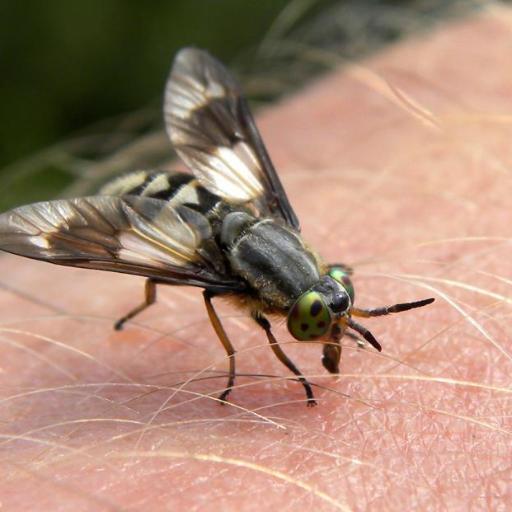
Known commonly as the Twin-lobed Deerfly, Chrysops relictus is a master of the summer wetlands. While they look like they’ve been painted with psychedelic watercolors—boasting metallic, jewel-like eyes and intricate wing patterns—they are notorious for their persistence. Often found near marshes and damp woodlands, these flies are the bold "fighter pilots" of the insect world, known for their circling flight patterns around humans and animals.
🔍 How to Identify
- 👁️ The Eyes: They possess stunning, iridescent eyes—usually bright lime green or gold—marked with dark, zig-zagging patterns that look like shifting geometric art.
- 🏁 Wing Patterns: Unlike common houseflies, their wings are marked with bold, dark brown or black bands and "clouds," making them easy to spot even when resting.
- 🐝 The Abdomen: The body is patterned with yellow and black; specifically, look for the "twin-lobed" black mark on the second abdominal segment, which distinguishes this species from its cousins.
🌲 Habitat & Ecology
- 💧 Lover of Water: You’ll most likely encounter them near "wet" habitats like bogs, damp meadows, and pond edges. Their larvae live in the mud, where they act as tiny predators of other small invertebrates.
- 🎯 Visual Hunters: Unlike many insects that use scent, these deerflies are highly visual. They are attracted to movement and dark-colored objects, which is why they seem to "stalk" hikers wearing navy or black clothing.
⚠️ Safety & Toxicity
- 🦟 The Bite: Be cautious—the females are blood-feeders. Unlike the needle-like puncture of a mosquito, deerflies have "scissor-like" mouthparts that slice the skin, leading to a sharp, painful bite and often a small, itchy welt.
- 🐕 Pet Safety: While they aren't venomous, their bites can cause significant distress and swelling in dogs and horses. If you’re walking near marshlands in mid-summer, using a pet-safe repellent is a good idea.
✨ Fun Fact
Those magnificent, glowing eyes aren't just for fashion! The patterns on their eyes are caused by light interference in the many layers of the cornea. This helps the fly filter out glare and track moving targets (like a passing hiker) with incredible precision, even in bright sunlight.
More Details








