Info
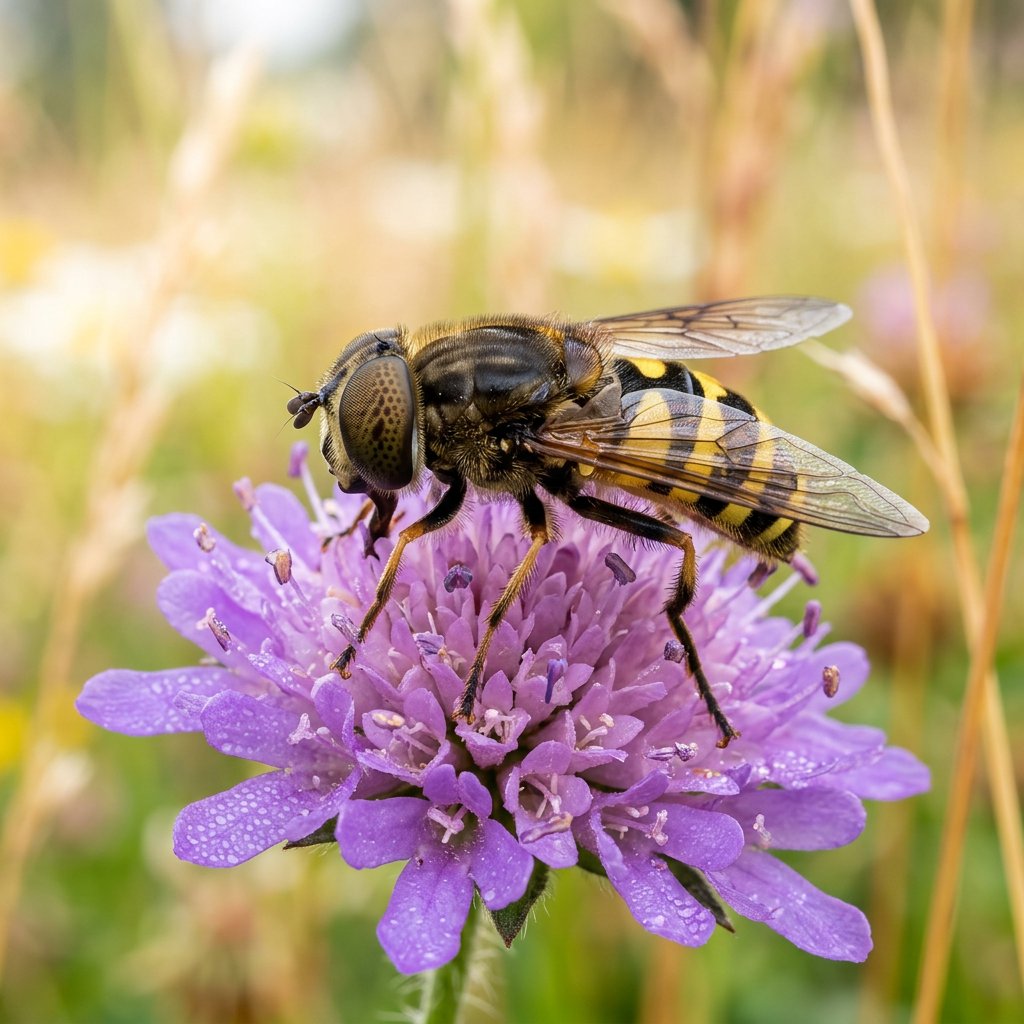
Known as the Elegant Hoverfly, this striking insect is a master of "Batesian mimicry"—the art of looking dangerous when you’re actually harmless. With its bold yellow-and-black stripes, it spends its life pretending to be a wasp to scare off hungry birds, while it peacefully sips nectar from garden flowers.
🔍 How to Identify
- 🐝 Wasp-Like Markings: The abdomen features bright yellow, slightly curved bands against a deep black background, mimicking the "caution" colors of a stinging social wasp.
- 📡 Long Antennae: Unlike many other hoverflies that have tiny stubs, Chrysotoxum elegans has noticeably long, dark antennae that point forward, adding to its wasp-like silhouette.
- ✈️ Stationary Hovering: Its flight style is a giveaway; it can hang perfectly still in mid-air before darting away with incredible speed, a feat true wasps struggle to perform.
🌲 Habitat & Ecology
- 🌼 The Gardener’s Guest: You will most likely spot them in sunny meadows, hedgerows, or near the edges of woodlands. They are particularly fond of flat-topped flowers like Hogweed or Wild Carrot, which serve as easy landing pads.
- ⚔️ Hidden Predators: While the adults are gentle pollinators, their larvae are stealthy hunters. They typically live in the soil or leaf litter, where they hunt and eat aphids, making them a "secret weapon" for natural pest control.
⚠️ Safety & Toxicity
- 🕊️ Total Bluff: Despite its scary appearance, this insect has no stinger and no venom. It is completely harmless to humans, dogs, and cats.
- 🚫 No Bite: It does not have biting mouthparts; it uses a soft "sponge-like" tongue to lap up nectar and pollen. If one lands on you, it is likely just looking for a salty drink of sweat or a place to sunbathe.
✨ Fun Fact
The "Elegant Hoverfly" is so committed to its disguise that it even mimics the behavior of a wasp by twitching its wings and abdomen when it lands, making its bluff even more convincing to potential predators.
More Details








